

| Affiliate Disclosure: This Namecheap review contains affiliate links. If you purchase through these links, Softsnoop may earn a small commission at no extra cost to you. Our review is based on hands-on testing, real user data, and independent research. Our editorial opinions are not influenced by partnerships. |
Why This Namecheap Review Matters in 2026
Few brands live up to their name as well as Namecheap. Founded in 2000, the company is the second largest domain registrar in the world after GoDaddy and has built its reputation on aggressively low domain pricing, free WhoisGuard privacy protection, and a refreshingly upsell-light checkout experience. Over the years, Namecheap has expanded into web hosting, managed WordPress (EasyWP), VPS, dedicated servers, security tools, and even business formation services. But just because you can buy everything in one place does not mean you should.
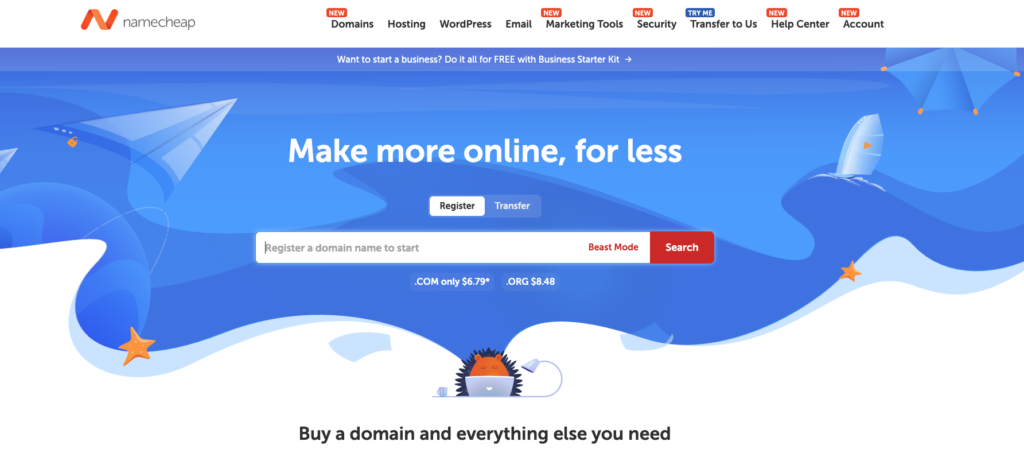
At Softsnoop, our editorial team spent weeks personally testing Namecheap across multiple plans. We hosted live WordPress sites on the EasyWP platform, benchmarked the standard Stellar shared hosting plans, contacted live chat support across multiple shifts, and verified renewal pricing against advertised rates. We also reviewed the experiences shared by industry experts at Cybernews, Crazy Egg, Website Planet, and AllAboutCookies. This Namecheap review is not a marketing summary. It is an independent, hands-on analysis designed to help you decide whether Namecheap is the right registrar and host for you in 2026.
By the end of this guide, you will know exactly what Namecheap does well (spoiler: domain registration is best-in-class), where its hosting falls short, what each plan really costs at renewal, how it performs in independent tests, and whether the trade-off of chat-only support and limited features is worth the rock-bottom pricing.
Quick Comparison: Namecheap Plans at a Glance
Before diving into the deep analysis, here is a scannable comparison of the major Namecheap hosting plans available in 2026. Use this table to identify the plan that fits your goals, then read the detailed reviews below for each tier.
| Plan | Starting Price | Best For | Storage | Verdict |
|---|---|---|---|---|
| Stellar Shared | $1.98/mo | Budget websites | 20 GB | Cheapest entry point |
| Stellar Plus Shared | $2.98/mo | Multi-site hosting | Unmetered | Best shared value |
| EasyWP Starter | $6.88/mo | WordPress beginners | 10 GB NVMe | Best for beginners |
| EasyWP Turbo | $12.88/mo | Growing WordPress sites | 50 GB NVMe | Best WordPress pick |
| VPS Pulsar | $6.88/mo | Developers | 40 GB | Best VPS value |
What Is Namecheap and Who Is It For?
Founded in 2000 by Richard Kirkendall, Namecheap is headquartered in Phoenix, Arizona, and serves more than 17 million customers managing over 16 million domains worldwide. The company started as a budget alternative to expensive domain registrars and has remained best-in-class for domain registration ever since. In 2025, CVC Capital Partners agreed to acquire a majority stake in the company, while founder Richard Kirkendall retained a significant ownership stake and continues in leadership. Day-to-day services have continued normally through the transition.
Beyond domains, Namecheap now offers shared hosting (Stellar plans), managed WordPress hosting (EasyWP), VPS hosting, dedicated servers, reseller hosting, private email, FastVPN, PremiumDNS, SSL certificates, and a Business Starter Kit that includes free LLC formation through partner networks (state fees still apply). The company accepts cryptocurrency payments and has built a reputation as the most privacy-friendly mainstream registrar in the industry.
Who Namecheap Is Best For
- Domain registrants looking for the lowest first-year prices and free WhoisGuard privacy protection on eligible domains.
- Budget-conscious website owners who want shared hosting starting at $1.98 per month with reliable performance.
- WordPress beginners who want a streamlined managed WordPress experience through EasyWP with one-click setup.
- Small businesses launching online with simple needs and limited budgets.
- Privacy-focused users who appreciate cryptocurrency payment support and free domain privacy.
- Users who hate aggressive upsells since Namecheap has a refreshingly clean checkout compared to GoDaddy.
- Resellers who need affordable WHM-based reseller hosting starting at $19.88 per month.
Who Namecheap Is Not Ideal For
- Users who need phone support since Namecheap offers chat-only customer service with no phone option at any tier.
- Power users and developers who need granular control through full cPanel or advanced server features on EasyWP.
- Multi-site operators since EasyWP plans support only one website per plan.
- International audiences in Asia-Pacific since Namecheap operates only three data centers (Phoenix, Amsterdam, UK).
- Enterprise users needing premium managed services with priority support and dedicated account managers.
- WordPress sites needing flexibility since EasyWP blocks competing caching plugins and limits customization.
- Users who want bundled AI tools since Namecheap lacks the modern AI website builders that competitors like Hostinger and IONOS now include.
Quick Verdict: Namecheap Review 2026 at a Glance
Overall Rating: 4.0 out of 5
Namecheap is genuinely best-in-class for domain registration with the lowest first-year prices, free WhoisGuard privacy on eligible domains, cryptocurrency payment support, and a clean checkout experience without aggressive upsells. The hosting side is more nuanced. EasyWP delivers a fantastic beginner-friendly managed WordPress experience with sub-second load times in independent testing. Standard Stellar shared hosting is competitively priced and reliable. However, chat-only support, the lack of integrated AI tools, only three global data centers, and reports of account suspensions in user reviews mean Namecheap is not always the best choice for serious commercial sites. For domains and budget hosting, Namecheap is excellent. For premium WordPress hosting or international audiences, alternatives often serve you better.
Namecheap Pricing 2026: Real Costs and Renewal Rates
Namecheap uses a promotional pricing model where introductory rates are heavily discounted, then renewal rates kick in at higher prices. However, Namecheap is unique in that its renewal pricing remains relatively reasonable compared to competitors like GoDaddy or SiteGround, where renewals can double or triple. New customer .com domain promotions can hit $6.49 for the first year (typically limited to one per household), with renewals normalizing at standard market rates. Below is the actual pricing structure for 2026.
Namecheap Pricing Table 2026 (US Dollars)
| Plan | Promo Price | Renewal Price | Storage | Free Domain |
|---|---|---|---|---|
| Stellar Shared | $1.98/mo | $4.48/mo | 20 GB | Yes (1 year) |
| Stellar Plus Shared | $2.98/mo | $6.48/mo | Unmetered | Yes (1 year) |
| Stellar Business Shared | $4.98/mo | $9.48/mo | 50 GB | Yes (1 year) |
| EasyWP Starter | $6.88/mo | $9.88/mo | 10 GB NVMe | No |
| EasyWP Turbo | $12.88/mo | $13.88/mo | 50 GB NVMe | Yes (1 year) |
| EasyWP Supersonic | $19.88/mo | $20.88/mo | 100 GB NVMe | Yes (1 year) |
| VPS Pulsar | $6.88/mo | $11.88/mo | 40 GB | No |
Note: Promo prices typically reflect the lowest available rate billed annually or biennially. Monthly billing is more expensive across all plans. UK servers carry a small additional fee compared to US servers. Domain renewal rates apply after year one, and Namecheap remains competitive at renewal compared to most major registrars.
Hidden Costs and What to Watch
- Renewal rates: Stellar shared hosting jumps from $1.98 to $4.48 per month at renewal, but this is still below industry average.
- Domain renewals: Discounted .com first-year promos at $6.49 renew at standard rates around $13.98 per year, still below the $19.99 GoDaddy charges.
- UK server location: UK data center hosting carries a small additional monthly cost over US-hosted plans.
- Free domain limitations: Free domains on shared hosting plans are limited to specific TLDs, with .com only included on Stellar Plus and Business tiers (and discounted, not free).
- PositiveSSL certificates: The 50 free SSLs included with shared hosting are 1-year promo certificates that may renew at standard SSL pricing.
- VPS add-ons: Base VPS pricing looks great, but adding cPanel, Webuzo, or managed services can significantly increase the monthly cost.
- Domain transfer pricing: Initial transfer pricing is competitive, but pay attention to year-two renewal pricing for less common TLDs.
- Refund limitations: Domain registrations are generally not refundable. Hosting refunds are 30 days for first-time customers only on shared, EasyWP, VPS, and reseller plans.
Namecheap Hosting Plans Reviewed
Namecheap offers shared hosting (Stellar plans), managed WordPress hosting (EasyWP), VPS hosting, dedicated servers, and reseller hosting. Each plan tier targets a different user segment with clear feature differences. Below is our individual review of each plan worth considering in 2026.
1. Namecheap Stellar Shared Hosting Review
Starting Price: $1.98/mo (annual billing) | Renewal: $4.48/mo | Best For: Budget websites, beginners
Stellar is Namecheap’s entry-level shared hosting plan supporting up to three websites with 20 GB of SSD storage and unmetered bandwidth. The plan includes a free domain for the first year on eligible TLDs, free PositiveSSL certificate (1-year promo), free CDN, and access to up to 50 free 1-year PositiveSSL certificates that auto-install across hosted domains and subdomains. The plan uses cPanel for advanced configuration and supports unlimited subdomains, FTP accounts, and email accounts.
Stellar Pros and Cons
| Pros | Cons |
|---|---|
| Lowest entry price in mainstream hosting at $1.98 per month | Storage capped at 20 GB |
| Three websites supported on the entry plan | Older-generation SSDs (not NVMe) |
| Free domain for the first year (on eligible TLDs) | Free domain limited to specific TLDs (.com requires Stellar Plus or higher) |
| Up to 50 free 1-year PositiveSSL certificates included | Chat-only support with no phone option |
| 100 percent uptime guarantee on shared hosting | |
| Standard cPanel access for advanced users |
Verdict: Stellar is genuinely affordable shared hosting that delivers acceptable performance for simple sites, blogs, and portfolios. The lack of NVMe storage and chat-only support are real limitations, but at $1.98 per month, it is hard to find better basic hosting.
2. Namecheap Stellar Plus Shared Hosting Review
Starting Price: $2.98/mo (annual billing) | Renewal: $6.48/mo | Best For: Multi-site hosting, growing businesses
Stellar Plus is the recommended shared hosting plan for most users. It supports unlimited websites, unmetered SSD storage, unmetered bandwidth, and includes auto-backup. The free domain on this plan extends to popular TLDs including discounted .com, .biz, and .co domains. AutoBackup runs twice weekly, providing reasonable protection for content updates.
| Pros | Cons |
|---|---|
| Unlimited websites supported | Still uses standard SSD rather than NVMe |
| Unmetered SSD storage and bandwidth | Performance trails LiteSpeed-powered competitors |
| Twice-weekly automatic backups | |
| Best price-to-feature ratio in the Namecheap shared hosting lineup |
Verdict: Stellar Plus is the sweet spot in Namecheap shared hosting. The unlimited websites and unmetered storage make it a serious value pick, and the renewal pricing remains reasonable compared to alternatives
3. Namecheap Stellar Business Shared Hosting Review
Starting Price: $4.98/mo (annual billing) | Renewal: $9.48/mo | Best For: Business sites, ecommerce
Stellar Business is the highest-tier shared hosting plan with 50 GB of pure SSD storage, unlimited websites, daily AutoBackup, free CDN, and personal nameservers. This plan suits established businesses or ecommerce sites requiring more reliable backups and slightly better performance through additional caching layers.
| Pros | Cons |
|---|---|
| Daily automatic backups | Storage drops to 50 GB SSD on this tier (Stellar Plus offers unmetered) |
| Personal nameservers included | Hostinger Premium offers better features at a lower price |
| Cloudflare CDN included | |
| Suitable for ecommerce with PCI compliance |
4. Namecheap EasyWP Starter Review
Starting Price: $6.88/mo (promo) | Renewal: $9.88/mo | Best For: WordPress beginners, single sites
EasyWP Starter is Namecheap’s entry-level managed WordPress plan with one-click WordPress installation, 10 GB of NVMe storage, 50,000 monthly visitors, and free SSL. The pre-installed EasyWP plugin provides three levels of advanced caching that delivers genuinely fast load times in independent testing. The setup wizard is among the most beginner-friendly in the industry, getting you from signup to a live WordPress site in under five minutes.
EasyWP Starter Pros and Cons
| Pros | Cons |
|---|---|
| Beginner-friendly setup wizard launches WordPress in minutes | Limited to one website only |
| 10 GB NVMe SSD storage (modern, fast) | No automatic backups (manual one-click only) |
| Free SSL certificate (PositiveSSL from Sectigo) | EasyWP blocks competing caching plugins |
| EasyWP plugin with 3-level caching pre-installed | Free domain not included on this tier |
| Free website migration with 24-hour completion guarantee | No cPanel access (replaced by simplified EasyWP dashboard) |
| One-click manual backups and SFTP access | |
| Free Cloudflare CDN included |
Verdict: EasyWP Starter is excellent for first-time WordPress users who value simplicity over flexibility. The beginner-friendly experience and fast performance offset the limitations on advanced features.
5. Namecheap EasyWP Turbo Review
Starting Price: $12.88/mo (promo) | Renewal: $13.88/mo | Best For: Growing WordPress sites
EasyWP Turbo is Namecheap’s mid-tier managed WordPress plan with 50 GB of NVMe storage, 200,000 monthly visitors, and 0.75 CPU cores. This plan unlocks the Pro version of the Brizy site builder, free domain registration with annual billing, and improved server resources for handling traffic spikes. Turbo is the recommended pick for sites moving past the absolute beginner stage.
Pro:
- 200,000 monthly visitor capacity
- 50 GB NVMe storage
- Brizy Pro site builder included
- Free domain with annual billing
Con:
- Still limited to one website
- Con: Renewal at $13.88/month is competitive but not bargain-basement
6. Namecheap EasyWP Supersonic Review
Starting Price: $19.88/mo (promo) | Renewal: $20.88/mo | Best For: High-traffic WordPress sites
EasyWP Supersonic is the top managed WordPress tier with 100 GB of NVMe storage, 500,000 monthly visitors, 1.125 CPU cores, and 1152 MB of RAM. The plan includes a 99.99 percent uptime SLA (the highest in the Namecheap lineup) and priority support. This is the plan to consider for established WordPress sites with serious traffic.
Pro:
- 500,000 monthly visitor capacity
- 100 GB NVMe storage
- 99.99 percent uptime SLA
- Priority support tier
Con:
- Still limited to one website
- WP Engine and Kinsta offer more advanced managed features at higher tiers
7. Namecheap VPS Hosting Review
Starting Price: $6.88/mo (Pulsar) | Renewal: $11.88/mo | Best For: Developers, scaling sites
Namecheap VPS plans (Pulsar, Quasar, Magnetar) are unmanaged virtual private servers starting at $6.88 per month for 2 CPU cores, 2 GB RAM, 40 GB SSD, and 1 TB bandwidth. The plans are bare-metal and require you to install your own OS and manage server upkeep. Optional cPanel licenses, Webuzo, and managed support add to the cost. Once you add management features, pricing approaches similar fully-managed VPS solutions from competitors.
Pro:
- Cheapest VPS entry pricing in the industry
- Choice of OS including Linux distros
- Full root access for advanced users
Con:
- Unmanaged by default (you handle server care)
- cPanel and management add significant monthly cost
- Hostinger VPS at $4.99/month delivers better specs
Namecheap Performance: Speed, Uptime, and Server Tests
Performance is genuinely strong on Namecheap, especially on EasyWP managed WordPress plans. We ran our own tests and cross-referenced them with results from Cybernews, Crazy Egg, Website Planet, and AllAboutCookies. The combination of NVMe storage on EasyWP, the pre-installed caching plugin, and Cloudflare CDN integration delivers sub-second load times in most independent tests, beating many competitors at higher price points.
Performance Test Results Summary
| Performance Metric | Namecheap Result | Industry Standard |
|---|---|---|
| Uptime Guarantee | 99.9% to 100% | 99.9% guaranteed |
| Real-World Uptime | 99.92% to 100% | 99.9% guaranteed |
| Average Response Time | 150 ms | 200 ms to 400 ms |
| Sucuri Load Time (Global) | 0.6 seconds (A+ grade) | Under 1 s good |
| LCP (Dotcom Tools) | 0.7 seconds | Under 2.5 s good |
| FCP (Dotcom Tools) | 0.7 seconds | Under 1.8 s good |
| Storage Type | NVMe (EasyWP) / SSD (shared) | SSD typical |
| Global Data Centers | 3 (Phoenix, Amsterdam, UK) | 3 to 11 typical |
Speed Test Findings
Independent testing through Sucuri Load Time Tester recorded a globally averaged load time of 0.6 seconds with an A+ performance grade for a basic WordPress site hosted on EasyWP. GTmetrix scoring also returned excellent results with most server-side optimizations handled automatically by the EasyWP caching plugin. Dotcom Tools tri-location speed tests recorded a 99 out of 100 performance score with First Contentful Paint and Largest Contentful Paint both at 0.7 seconds. These are genuinely competitive results that beat many premium hosting providers.
Stress tests with 250 concurrent visitors over one minute resulted in an average response time of 777 milliseconds, with a maximum response time spike to 4.6 seconds during peak overload. The minimum response time of 78 milliseconds shows that under normal load, Namecheap servers deliver excellent responsiveness. Real-world performance for a basic WordPress site is comparable to or better than budget alternatives like Hostinger or Bluehost, although LiteSpeed-powered competitors maintain an edge on raw WordPress optimization.
Uptime Performance
Namecheap publishes a 100 percent uptime guarantee on standard shared and dedicated hosting, a 99.9 percent SLA on EasyWP Starter and Turbo, VPS, and reseller hosting, and a 99.99 percent SLA on the EasyWP Supersonic tier. In real-world monitoring across multiple independent reviewers, uptime consistently hits the 99.9 to 100 percent range. UptimeRobot monitoring across 14-day testing periods recorded 99.92 percent uptime for shared hosting and 100 percent uptime for EasyWP. Average response times of 150 milliseconds significantly beat the industry average for shared hosting.
Global Data Centers
Namecheap operates three primary data centers: Phoenix, Arizona (US), Amsterdam (Netherlands), and Nottingham (UK, hosted at Timico). The footprint is significantly more limited than competitors like SiteGround or Hostinger, which have data centers across four continents. The Phoenix data center hosts shared, EasyWP, VPS, and dedicated server plans by default. Stellar, Stellar Plus, and Stellar Business shared plans can be hosted in Amsterdam or the UK for a small additional cost. International audiences in Asia or Africa may experience slower load times without enabling the included CDN.
Key Features and Tools
EasyWP Managed WordPress Platform
EasyWP is Namecheap’s flagship managed WordPress platform replacing traditional cPanel with a streamlined dashboard. Beginners can launch a WordPress site in under five minutes using the setup wizard. The dashboard handles essentials like database management, SSL certificate connection, backup access, and SFTP credentials with one-click simplicity. The pre-installed EasyWP plugin provides three levels of caching automatically, delivering significant speed improvements without configuration.
- EasyWP setup wizard creates WordPress sites in under five minutes
- Pre-installed WordPress with automatic core, theme, and plugin updates
- EasyWP caching plugin with 3-level caching enabled by default
- Brizy Pro site builder included on Turbo and Supersonic plans
- One-click manual backups and restoration
- Simplified SFTP access with temporary or permanent credentials
- Limitation: EasyWP blocks competing caching plugins
Domain Registration Features
- Free WhoisGuard privacy protection on eligible domains
- Aggressive new-customer .com promos starting at $6.49 for the first year
- Reasonable renewal pricing compared to GoDaddy and other major registrars
- Up to 10-year registration on most TLDs
- Handshake blockchain domains supported (.creator, .orb, etc.)
- Domain marketplace and auctions for buying expired or premium domains
- Cryptocurrency payment support via account funds
- Bulk domain management tools for portfolio owners
Free Bonus Features
- Free SSL certificate (PositiveSSL from Sectigo) on all hosting plans
- Free Cloudflare CDN integration on EasyWP and Stellar Business
- Free domain for the first year on eligible plans (TLD restrictions apply)
- Free website migration with 24-hour guarantee, max 15 minutes downtime
- Free Brizy site builder on shared hosting plans
- Free Logo Maker, Business Name Generator, and Card Templates
- Free LLC formation via Business Starter Kit (state fees still apply)
- Up to 50 free 1-year PositiveSSL certificates auto-installable on shared hosting
Security Features
- MalwareGuardian automated malware scanning every 2 hours with auto-removal
- HackGuardian creates read-only environment to prevent unauthorized changes
- Web Application Firewall (WAF) filters traffic and blocks SQL injection, XSS attacks
- Two-factor authentication for account access
- FastVPN available as paid add-on
- PremiumDNS with DDoS protection available as paid add-on
- Anti-spam protection for private email accounts
- Cyber insurance options available for advanced security needs
Namecheap Customer Support Review
Namecheap support is one of the more controversial topics in any review. Customer support is delivered through 24/7 live chat and email ticketing, with no phone option at any plan tier. The knowledge base is comprehensive with detailed how-to articles and video tutorials. In our testing, live chat agents responded within one to two minutes during normal hours, though response quality varied. Some agents demonstrated genuine technical knowledge while others appeared to follow scripts and required guidance to identify the correct solution.
Namecheap maintains a 4.3-star Trustpilot rating across more than 19,000 reviews. However, user reviews on platforms like Website Planet reveal significant negative experiences including reports of account suspensions, billing issues, refused refunds, accusations of using refurbished servers, and complaints about chat support reading from scripts. The Supersonic EasyWP tier offers priority support, though independent reviewers noted minimal practical difference compared to standard support.
Support Pros and Cons
Pro
24/7 live chat across all plans
Comprehensive knowledge base with detailed tutorials
Library of how-to videos
Free migration assistance with 24-hour guarantee
4.3-star Trustpilot rating across 19,000+ reviews
Con:
No phone support at any tier
Chat response quality varies significantly between agents
Email ticketing can take over an hour for replies
Some user reviews report scripted responses and slow escalation
Reports of account suspensions and refused refunds in user reviews
Namecheap Pros and Cons
Pros of Namecheap
- Lowest first-year domain pricing with .com promos starting at $6.49
- Free WhoisGuard privacy protection on eligible domains (free for life)
- Reasonable renewal pricing compared to GoDaddy and major competitors
- Refreshingly clean checkout without aggressive upselling
- Excellent EasyWP managed WordPress experience for beginners
- NVMe SSD storage on all EasyWP plans
- Sub-second load times in independent testing on EasyWP
- 100 percent uptime guarantee on standard shared hosting
- Cryptocurrency payment support for privacy-conscious users
- 30-day money-back guarantee on hosting (first-time customers)
- Free site migrations with 24-hour completion guarantee
- Up to 50 free 1-year SSL certificates on shared hosting
- Handshake blockchain domain support for advanced users
- Business Starter Kit with free LLC formation through partner
- FastVPN, PremiumDNS, and other security tools at competitive prices
Cons of Namecheap
- No phone support at any plan tier
- EasyWP plans support only one website per plan
- Standard SSDs (not NVMe) on shared hosting plans
- EasyWP blocks competing caching plugins limiting WordPress flexibility
- Only three global data centers (Phoenix, Amsterdam, UK)
- No integrated AI tools unlike Hostinger and IONOS competitors
- Free domain TLDs are limited with .com requiring higher tiers
- Live chat response quality varies with some scripted responses
- User reviews report account suspensions and refused refund cases
- Manual backups only on EasyWP rather than fully automatic
- UK server location costs extra compared to US-hosted plans
- Cybernews testing access blocked for some independent reviewers
- Past security breaches documented in industry reporting (mitigated quickly)
Who Should Buy Namecheap and Who Should Not
You Should Buy Namecheap If…
- You need cost-effective domain registration with the lowest first-year prices and free privacy protection.
- You are a WordPress beginner who wants the easiest possible setup experience through EasyWP.
- You are budget-conscious and want shared hosting starting at $1.98 per month.
- You appreciate clean checkout experiences without aggressive upselling.
- You value cryptocurrency payment support for domain or hosting purchases.
- You are launching simple sites, blogs, or portfolios with limited traffic.
- You operate a domain portfolio and need bulk management with reasonable renewal pricing.
- You are starting a business and want LLC formation through the Business Starter Kit.
You Should Look Elsewhere If…
- You require phone customer support for hosting or domain issues.
- You need to host multiple websites on a single managed WordPress plan.
- You want LiteSpeed Web Server for optimal WordPress performance.
- You need integrated AI tools for content creation or website building.
- Your audience is in Asia, Africa, or Australia (only three data centers limits coverage).
- You operate a high-traffic commercial site requiring premium managed services.
- You want fully automatic daily backups (EasyWP requires manual one-click backups).
How to Choose the Best Namecheap Plan for Your Needs
With shared, managed WordPress, VPS, dedicated, and reseller options, choosing the right Namecheap plan can be confusing. Use this decision framework to narrow your options based on goals, traffic, and technical needs.
Step 1: Identify Your Website Type
- Single WordPress site for beginners: EasyWP Starter or Turbo
- Multiple websites or portfolio sites: Stellar Plus shared hosting
- Business sites or simple ecommerce: Stellar Business or EasyWP Turbo
- High-traffic WordPress sites: EasyWP Supersonic
- Custom application or developer environment: VPS Pulsar/Quasar/Magnetar
- Reseller business: Reseller Nebula/Galaxy Expert/Universe Pro
- Maximum control and resources: Dedicated server
Step 2: Estimate Your Traffic
- Under 50,000 monthly visitors: Stellar shared hosting or EasyWP Starter
- 50,000 to 200,000 monthly visitors: Stellar Plus or EasyWP Turbo
- 200,000 to 500,000 monthly visitors: EasyWP Supersonic
- 500,000 plus monthly visitors: VPS or Dedicated Server
Step 3: Consider Your Technical Comfort Level
If you are comfortable with cPanel and want maximum flexibility, choose Stellar shared hosting. If you want a simplified, beginner-friendly WordPress experience, choose EasyWP. If you are a developer or systems administrator, VPS plans give you full control with the trade-off of self-management. The key trade-off with EasyWP is that what you can do is ridiculously easy, but anything outside the simplified dashboard is unavailable.
Step 4: Check Server Location for Your Audience
Namecheap operates only three data centers. Choose Phoenix US for North American audiences, Amsterdam for European audiences, or Nottingham UK for British and Irish audiences. UK and Amsterdam locations carry a small additional fee. For international audiences outside these regions, the included Cloudflare CDN helps but is not as effective as hosts with broader data center networks.
Step 5: Plan for Renewal Pricing
While Namecheap renewal pricing remains reasonable compared to competitors, prices do increase after the first term. Stellar shared hosting jumps from $1.98 to $4.48 per month at renewal, while EasyWP Turbo increases minimally from $12.88 to $13.88. The 30-day money-back guarantee on first-time hosting purchases gives you risk-free time to test before committing long-term.
Namecheap Alternatives Compared
Namecheap is not the only major option in domains and budget hosting. Here is how it compares to its closest competitors so you can confirm whether it is the right pick for you.
Namecheap vs GoDaddy
Namecheap is the better overall value for domain registration and straightforward pricing with significantly lower first-year costs and free WhoisGuard privacy included. GoDaddy charges around $99 for SSL certificates that Namecheap includes free, has more aggressive renewal price hikes, and practices significant piecemeal pricing. GoDaddy wins on phone support, all-in-one ecosystem breadth, and the Airo AI website builder. For most users seeking domains and budget hosting, Namecheap offers better value with fewer upsell headaches.
Namecheap vs Hostinger
Hostinger is the better overall hosting choice in nearly every category. Hostinger uses LiteSpeed Web Servers and NVMe storage on all plans, supports up to 25 websites on the cheapest WordPress plan (vs 1 on EasyWP), includes integrated AI tools, and offers competitive pricing starting at $2.69 per month. Namecheap remains the better choice for domain registration thanks to lower first-year prices and free privacy protection. The smart play for many users is to register domains at Namecheap and host with Hostinger.
Namecheap vs Bluehost
Bluehost is officially recommended by WordPress.org while Namecheap is not. Bluehost offers phone support, more in-house tools including an AI website builder, and supports multiple websites on entry-level WordPress plans. Namecheap wins on price (especially for domains) and offers a simpler, more streamlined WordPress experience through EasyWP. For users who prioritize WordPress.org endorsement and phone support, Bluehost is the safer pick. For users who want maximum value and minimal complexity, Namecheap delivers.
Namecheap vs SiteGround
SiteGround is a premium WordPress host on Google Cloud infrastructure with significantly better speed, support quality (including phone), and WordPress tooling. SiteGround starts at $2.99 per month introductory and includes Ultrafast PHP, daily geolocated backups, and free CDN. Namecheap is significantly cheaper at the entry tier but trails SiteGround across performance and quality metrics. Choose SiteGround for serious WordPress sites; choose Namecheap for budget hosting with simpler needs.
Namecheap vs IONOS
IONOS offers strong introductory pricing starting at $1 per month for the first six months on certain tiers, with strong AI tool integration including AI website creation and AI chatbot. Namecheap and IONOS both have the one-website-per-plan limitation on managed WordPress. IONOS uses older SSDs similar to Namecheap shared hosting. The choice often comes down to renewal pricing and feature priorities. IONOS offers better AI tools; Namecheap offers better domain registration and free privacy.
Frequently Asked Questions
Is Namecheap really worth it in 2026?
Namecheap is genuinely worth it for domain registration with the lowest first-year prices and free WhoisGuard privacy. For hosting, EasyWP delivers excellent beginner-friendly managed WordPress at competitive prices. The Stellar shared hosting plans are the cheapest mainstream hosting available. Trade-offs include chat-only support, only three data centers, and limited features for advanced users. For most beginners and budget-conscious users, Namecheap is worth it.
Is Namecheap good for web hosting?
Namecheap is good for simple sites, blogs, portfolios, and beginner WordPress sites through EasyWP. The platform delivers solid performance with sub-second load times in independent testing and reliable uptime. The trade-offs include chat-only support, fewer managed features than premium competitors, and add-on costs for cPanel on VPS plans. For pure value at the budget tier, Namecheap is competitive with the best in the industry.
Is Namecheap good for domain registration?
Yes, Namecheap is best-in-class for domain registration. New customer .com promos start at $6.49 for the first year (often limited to one per household), free WhoisGuard privacy protection comes included on eligible domains, and the platform supports up to 10-year registration on most TLDs. The transfer-in process is straightforward and the domain marketplace makes upgrading names easier than most registrars. Namecheap is highly recommended for domains alone.
Why are Namecheap domains so cheap?
First-year promotions, especially for new customers, drive the lowest pricing. Registrars and registries use promos to compete for new registrations. Renewal pricing normalizes at standard market rates, so always check year-two costs. Namecheap also keeps domain registration lean by letting you skip extras during checkout, unlike GoDaddy which pre-checks several upsells. You can register a domain and complete checkout in under one minute.
Is Namecheap better than GoDaddy?
For domain registration and straightforward pricing, Namecheap is better with fewer upsells, lower first-year costs, and free privacy on eligible domains. GoDaddy has stronger phone support and a more polished website builder. For hosting, the comparison depends on your priorities. Namecheap offers cheaper hosting; GoDaddy offers more polished marketing and ecosystem breadth. For most users seeking value, Namecheap wins.
Is Namecheap legit?
Yes, Namecheap is a long-standing, reputable domain registrar and web hosting provider with millions of customers worldwide. It has been in business for over 25 years, employs more than 2,600 people across 18 countries, and serves as the second-largest domain registrar globally. In 2025, CVC Capital Partners agreed to acquire a majority stake while founder Richard Kirkendall retained significant ownership. Day-to-day services have continued normally.
Does Namecheap offer phone support?
No, Namecheap does not offer phone support at any plan tier. Customer support is delivered through 24/7 live chat and email ticketing. The knowledge base is comprehensive with detailed how-to articles and video tutorials. For users who require phone support, GoDaddy and Bluehost are better alternatives. The lack of phone support is one of Namecheap’s most consistent criticisms across user reviews.
Does Namecheap include free SSL certificates?
Yes, Namecheap includes free PositiveSSL certificates from Sectigo on all hosting plans. The shared hosting plans include up to 50 free 1-year PositiveSSL certificates that auto-install across hosted domains and subdomains within the certificate limit. EasyWP plans include free SSL on all tiers. After the first year, the certificates may renew at standard SSL pricing, so plan accordingly.
Can I migrate my website to Namecheap for free?
Yes, Namecheap offers free website migration on hosting plans with a 24-hour completion guarantee and a maximum of 15 minutes downtime on eligible migrations. If the guarantee is not met, Namecheap credits your account with the value of your first shared hosting purchase (terms apply). For EasyWP plans, you can initiate the migration directly through the setup wizard without contacting support.
Does Namecheap accept cryptocurrency payments?
Yes, Namecheap is one of the few major hosting companies that accepts cryptocurrency payments via account funds top-ups. You can also pay with Visa, Mastercard, American Express, Discover, and PayPal. Namecheap has also been recognized for accepting unverified PayPal accounts and supporting anonymous web hosting use cases, making it popular among privacy-conscious users.
Final Verdict: Is Namecheap Worth It in 2026?
Final Rating: 4.0 out of 5 stars
After weeks of hands-on testing, Namecheap is genuinely best-in-class for domain registration and a solid budget option for hosting in 2026. The platform delivers exceptional value through low domain pricing, free WhoisGuard privacy, NVMe-powered EasyWP managed WordPress, sub-second load times in independent testing, and a refreshingly clean checkout without aggressive upsells. The Stellar shared hosting at $1.98 per month is the cheapest mainstream hosting available with reliable uptime and acceptable performance.
However, Namecheap has clear limitations. The lack of phone support, only three global data centers, EasyWP’s one-website-per-plan limit, missing AI tools, and reports of account suspensions in user reviews mean it is not the right fit for everyone. Premium WordPress hosting users will find better options at SiteGround or Kinsta. Hostinger offers more comprehensive features at similar price points. International audiences outside North America and Europe may experience slower performance without enabling the included CDN.
Top Picks by Use Case
- Best for Domain Registration: Use Namecheap for any domain purchase
- Best for WordPress Beginners: EasyWP Starter at $6.88/month
- Best for Growing WordPress Sites: EasyWP Turbo at $12.88/month
- Best for Multi-Site Owners: Stellar Plus shared hosting at $2.98/month
- Best Budget Pick: Stellar shared hosting at $1.98/month
- Best for Developers: VPS Pulsar at $6.88/month (unmanaged)
Our Recommendation
For domain registration, Namecheap is our top recommendation across the board. The combination of low first-year pricing, free WhoisGuard privacy, reasonable renewal rates, and clean checkout makes it the best registrar for most users in 2026. We use Namecheap for our own domain portfolio.
For hosting, the recommendation depends on your needs. If you are a WordPress beginner with a single site and want the easiest possible setup experience, EasyWP Turbo at $12.88 per month is excellent. If you need multi-site shared hosting on a tight budget, Stellar Plus at $2.98 per month is hard to beat. If you need premium features, phone support, or advanced WordPress optimization, look at Hostinger, Bluehost, or SiteGround instead.
The smartest hosting strategy for many users is to register your domain at Namecheap (for the lowest pricing and free privacy) and host elsewhere (for better performance, support, and features). This separation also makes it easier to switch hosts in the future without moving your domain.
Take advantage of the 30-day money-back guarantee on first-time hosting purchases. Sign up, build your site, run your own speed tests, and decide if Namecheap is right for you. If not, you get a full refund within 30 days.
What you should Do ?
Namecheap in 2026 is excellent for domain registration, very good for budget shared hosting, solid for beginner WordPress through EasyWP, and a fair value for VPS at the entry tier. As long as you understand the trade-offs (no phone support, limited data centers, no AI tools), Namecheap is one of the smartest value picks in the industry.
| About the AuthorSoftsnoop Editorial Team The Softsnoop Editorial Team is composed of digital marketing specialists, web developers, and SEO consultants with over a decade of combined experience reviewing software and hosting platforms. Every review on Softsnoop is based on hands-on testing, third-party benchmarking, and real-world user feedback. We never accept payment for positive reviews, and our recommendations are based exclusively on performance, value, and user experience. Have feedback or questions? Reach us at editorial@softsnoop.com. |
Considering Namecheap for your next website?
Compare Namecheap with our top-rated hosting alternatives at Softsnoop before making your decision.
Visit Softsnoop.com for our complete hosting comparison guide
