

From free email finders to agency-grade link building engines, we tested and compared 7 blogger outreach platforms across prospecting quality, follow-up automation, relationship tracking, reporting, and price to help you pick the right tool for your outreach program.
Quick Verdict: Our Top 4 Picks
| Platform | Best For | Starting Price | Score |
|---|---|---|---|
| Pitchbox | High-Volume Link Building | $165/mo | 9.4/10 |
| Respona | Content-Led Outreach & Digital PR | ~$99/mo | 9.2/10 |
| BuzzStream | Long-Term Relationship Management | $24/mo | 8.9/10 |
| Postaga | AI-Assisted Campaigns on a Budget | $99/mo | 8.2/10 |
Blogger Outreach Software Matters More Than Ever in 2026
Outreach used to be a spreadsheet and a lot of patience. That stopped working somewhere around the point where every SEO team on earth started pitching the same 200 sites in your niche. Editors now get dozens of pitches a week, they filter aggressively, and a generic template gets deleted before it gets read. The tool you pick determines whether your pitches land in a real inbox, whether your follow-ups go out on time, and whether you can prove any of it worked.
There is also more money moving through this channel than most people realize. Global influencer marketing spend was projected to pass $24 billion in 2025, and blogger outreach sits right next to it in the same budget line. Digital PR, link building, and creator partnerships have quietly merged into one workflow at a lot of companies.
Today you are really choosing between three kinds of tool. A dedicated outreach engine built for volume and sequencing. A relationship CRM built to remember every conversation you have ever had with a publisher. Or a creator marketing platform built around discovery, contracts, and payments. Each solves a different problem, and picking the wrong category is a more expensive mistake than picking the wrong vendor inside the right one.
This guide compares 7 platforms through the lens of what actually matters in 2026: prospect data quality, follow-up logic, relationship history, reporting that connects effort to placements, and whether the thing still works when you are running twelve campaigns at once. We cross-referenced hands-on evaluation with verified review patterns from G2, Capterra, and practitioner threads on r/SEO and r/bigseo.
How We Tested and Evaluated
Each platform was put through the same workflow: build a prospect list of 100 blogs in a single niche, verify contact data, write and personalize a pitch, launch a three-step sequence with follow-ups, track replies, and pull a report at the end. We then repeated the exercise across a second campaign to see how well each tool handled overlap, duplicate contacts, and shared ownership.
We scored across seven criteria: Prospect Data Quality, Follow-Up Automation, Relationship Tracking, Reporting Depth, Collaboration, Ease of Use, and Pricing Value.
One pattern showed up clearly. Tools that look similar on a feature list diverge sharply once volume increases. Pitchbox and BuzzStream hold their shape at scale because they were built for it. Lighter tools like Hunter and Postaga are excellent value at low volume and start creaking somewhere past a few hundred active conversations. Meanwhile the influencer-first platforms, Sprout Social and Upfluence, solve a genuinely different problem and should not be judged on link building at all.
In-Depth Reviews: 7 Best Blogger Outreach Software for 2026
1. Pitchbox
The Purpose-Built Outreach Engine for Agencies Running Serious Volume
Our Score: 9.4/10
Quick Facts
| Pricing | Pro: $165/mo (2 users) | Advanced: $420/mo | Scale: $675/mo | Enterprise: custom |
| Platform | Web-based |
| Category | Outreach Automation / Link Building |
| Skill Level | Intermediate to Advanced |
| Free Plan | No, free trial available |
| G2 Rating | 4.7/5 |
Detailed Review
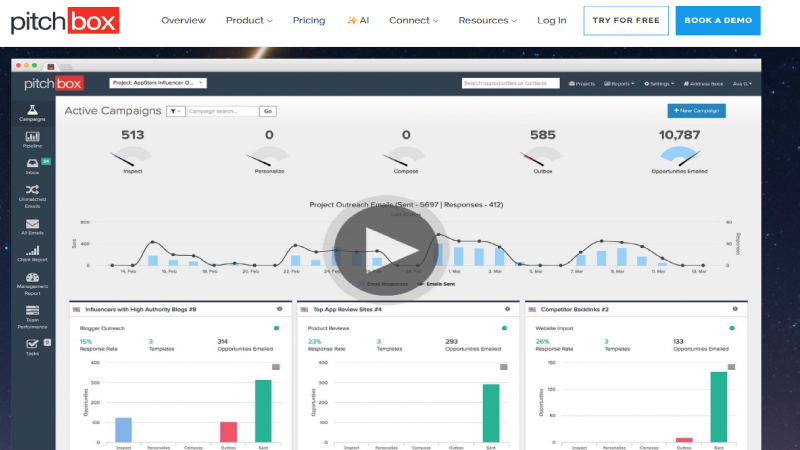
Pitchbox is not an all-in-one marketing suite and does not pretend to be. It does blogger outreach, link building, and partner communication, and it does those three things with a level of control nothing else on this list matches. That narrow scope is the whole point. Agencies pick it because outreach is the job, not a side feature bolted onto a bigger platform.
The numbers back the reputation. G2 reviewers rate automatic follow-up at 98% against a category average of 92%, and import/export at 98% against a category average of 91%. In practice that means you can drop a list of 2,000 prospects into a campaign, set a five-step sequence with conditional logic, and walk away without wondering whether follow-up three actually went out. The Pipeline view shows you where every single opportunity sits, from first contact through to a live link.
The inspect-and-personalize feature is the underrated part. Before a campaign goes live you can review the actual article you are pitching against, confirm it is a real fit, and pull specifics into the message. Combine that with AI-assisted templates carrying variables for name, role, and location and you get personalization that survives contact with a 1,500-prospect list. Native integrations with Ahrefs, Majestic, and Semrush pull domain metrics straight into the workflow so you are not tabbing between four tools during prospecting.
The friction is real though. Email authentication is on you. SPF, DKIM, and DMARC all get configured outside the platform before you can send anything, which catches out teams coming from fully managed email environments. The built-in MXright tester will flag remaining deliverability problems before you launch, but the setup itself sits outside the interface. Contact suggestions can also surface prospects that miss the mark on tightly scoped niche campaigns.
Adoption skews heavily toward small businesses at 76% and mid-market at 22%, which tells you exactly who this is for: execution-focused SEO agencies and PR teams, not enterprise marketing departments.
Pros & Cons
| PROS | CONS |
|---|---|
| Best-in-class follow-up automation, 98% rated vs 92% category average | Manual SPF, DKIM, and DMARC setup required before launch |
| Pipeline view gives clear opportunity status end to end | No free plan, and entry price is $165/mo |
| Native Ahrefs, Majestic, and Semrush metric integration | Contact suggestions can miss on narrow niche campaigns |
| Inspect-and-personalize keeps quality high at volume | Steep enough learning curve that full value takes weeks |
| Handles hundreds of simultaneous conversations without drag | Overkill if you send fewer than 200 pitches a month |
| Strong multi-client campaign management for agencies |
What the Community Says
“I really appreciate the simplicity of setting up Pitchbox. The AI templates, CRM, and Dashboard are standout features for me. Using it for reaching out to niche and geographically relevant link placements has been a huge benefit.” – Chris R., G2 review
BEST FOR SEO agencies, link building teams, and digital PR operations running high-volume, repeatable outreach across multiple clients.
2. Respona
All-in-One Outreach Built Around Content and Link Acquisition
Our Score: 9.2/10
Quick Facts
| Pricing | Starter: ~$99/mo | Unlimited: ~$399/mo (credit-based, tiers have changed recently) |
| Platform | Web-based |
| Category | Outreach Automation / Digital PR |
| Skill Level | Beginner to Intermediate |
| Free Plan | No, 14-day trial |
| G2 Rating | 4.8/5 |
Detailed Review
Respona carries the highest G2 rating in this category at 4.8 out of 5, and the reason is not any single feature. It is that the whole workflow hangs together. Prospecting, contact discovery, email verification, personalization, sending, and tracking sit in one continuous flow rather than five separate steps you have to stitch together yourself.
The feature scores are strong across the board. Automatic follow-up sits at 95%, content scheduling at 94%, import/export at 93%, and the blogger database at 92% against a category average of 87%. What that translates to day to day is that you can go from a keyword or a URL to a live campaign in an afternoon without exporting anything to a spreadsheet.
Where Respona genuinely separates itself is the strategy layer. It does not just help you send emails, it walks you through how to structure a link building campaign in the first place: which angles work, which prospect types convert, what to pitch and when. For teams who have never run outreach properly, that guidance is worth more than the automation.
The adoption profile tells you who it is built for. Small businesses make up 58% of users, mid-market 34%, and enterprise just 8%. This is a tool for execution-focused teams who want structure without building a system around it.
Two things to know before you commit. The pricing is credit-based and there is no free tier, so you pay before you can validate fit at your real volume. Pricing has also shifted recently across published sources, so confirm current tiers on Respona’s pricing page rather than trusting a comparison post. And while the prospect database is broad, reviewers do flag occasional outdated emails that need manual verification before sending.
Pros & Cons
| PROS | CONS |
|---|---|
| Highest G2 rating in the category at 4.8/5 | Credit-based pricing with no free tier to test with |
| Prospecting through tracking runs as one connected workflow | Occasional outdated emails in the prospect database |
| Built-in link building strategy guidance, not just automation | Prospect filters less advanced than Pitchbox |
| Blogger database rated 92% vs 87% category average | Slower loading on very large lists |
| Fast setup with genuinely low operational overhead | Pricing tiers have shifted, published figures vary |
| Contact discovery and email verification built in | Thin enterprise feature set |
What the Community Says
“That they give you the full strategy on actually how to acquire backlinks. The software is easy to use and provides a lot of value to the user. It does a lot of the work for us.” – Armstrong L., G2 review
BEST FOR In-house content and SEO teams running link building and digital PR who want the whole workflow in one place without heavy configuration.
3. BuzzStream
The Relationship CRM for Teams Who Play the Long Game
Our Score: 8.9/10
Quick Facts
| Pricing | Starter: $24/mo | Growth: $124/mo ($99 annual) | Professional: $299/mo ($249 annual) |
| Platform | Web-based, plus Chrome extension |
| Category | Outreach CRM / Digital PR |
| Skill Level | Beginner to Intermediate |
| Free Plan | No, 14-day trial, no card required |
| G2 Rating | 4.2/5 |
Detailed Review
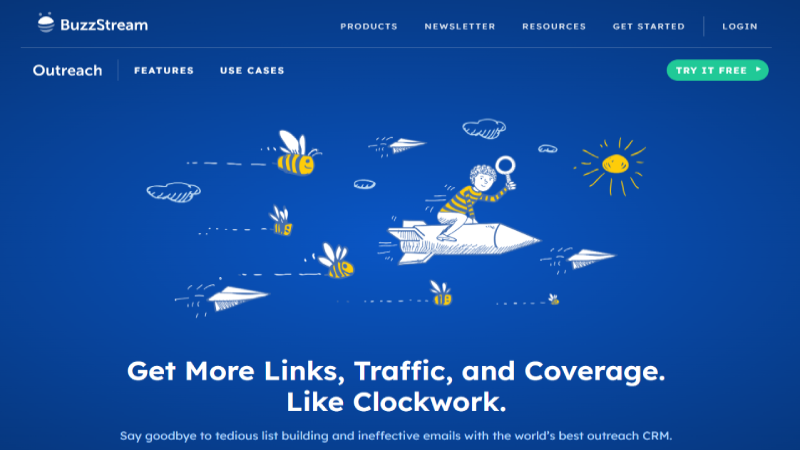
BuzzStream approaches the problem from the opposite direction to Pitchbox. Instead of optimizing for how many pitches you can send, it optimizes for how much you remember. Every contact, every past pitch, every placement, every note about who replied and who ghosted you lives in one database that does not reset between campaigns.
That matters more than it sounds. If you have pitched a site three times over two years, the fourth pitch should not open with an introduction. BuzzStream makes that context available before you write, which is why digital PR teams with long publisher relationships tend to stay on it for years.
The operational features are solid. Automatic follow-up is rated at 94%, import/export at 92%, and reports and visualization at 91%. Link monitoring runs on a recurring schedule so you find out when a placement gets pulled rather than discovering it during a quarterly audit. The Chrome extension lets you build contact records while browsing, and the Hunter integration verifies emails without leaving the platform.
At $24 a month for the Starter plan it is also the cheapest genuine outreach platform here, which makes it the obvious entry point for a solo SEO or a small in-house team. Note that Starter caps you at 1,000 contacts, so growth to $124 a month comes faster than the headline price suggests.
The gripes are consistent. Link status checks occasionally flag live placements as removed, which means you cannot fully trust the monitoring without spot checks. And several reviewers describe the interface as hard to navigate at first, particularly for people new to outreach who are still learning where things live.
Pros & Cons
| PROS | CONS |
|---|---|
| Cheapest real outreach platform at $24/mo entry | Link status checks sometimes flag live links as removed |
| Best relationship history and contact continuity here | Interface takes time to learn, navigation is not obvious |
| Recurring link monitoring across published placements | Starter caps at 1,000 contacts, upgrade comes quickly |
| Chrome extension and Hunter integration for list building | Prospect discovery weaker than Pitchbox or Respona |
| Clear ownership so teams avoid duplicate outreach | Lowest G2 rating of the dedicated outreach tools at 4.2/5 |
| Reporting ties activity to placements, not just opens | Real cost climbs fast past the Starter tier |
What the Community Says
“It checks all the paid links for the website on a monthly basis. We just need to update all the published links on BuzzStream, and keep a check on all the links if they are still published or have been removed.” – Kiran R., G2 review
BEST FOR SEO and digital PR teams who care more about relationship continuity and placement tracking than raw sending volume.
4. Sprout Social Influencer Marketing
Centralized Creator Intelligence for Large, Multi-Stakeholder Programs
Our Score: 8.6/10
Quick Facts
| Pricing | From $199 per seat/mo |
| Platform | Web-based |
| Category | Influencer Marketing / Creator Management |
| Skill Level | Intermediate |
| Free Plan | No, free trial available |
| G2 Rating | 4.3/5 |
Detailed Review
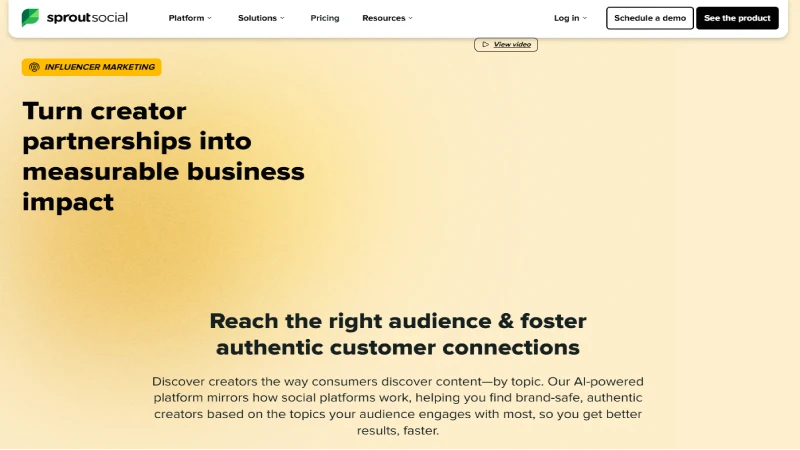
This one is a different animal, and you should know that going in. Sprout Social Influencer Marketing is built for influencer and creator programs, not for pitching guest posts to niche blogs. If your outreach lives closer to PR and brand partnerships than to link building, it belongs on your shortlist. If you are chasing backlinks, it does not.
Within its lane it is genuinely strong. The core value is governance. Sourcing, evaluation, communication, contracts, and reporting all live in one system, which means nobody is digging through Slack to find out what you agreed to pay a creator four months ago. Selection criteria, import/export, and the blogger search engine all sit at 82%, and the affinity tool surfaces similar creators quickly, which matters when a client hands you a preferred collaborator list and expects you to build outward from it.
Native analytics replace the ritual of chasing creators for screenshots of their own performance. Reporting comes out presentation-ready, which for agencies is the difference between an hour of work and five minutes.
The distribution is broader than you would expect for an enterprise-priced tool: small businesses at 42%, mid-market at 37%, and enterprise at 21%. The pull is toward teams running recurring programs rather than one-off campaigns.
The complaints center on the redesign. The updated interface adds navigation steps that were not there before, and reviewers who used the old layout preferred it. Creator location data and geographic filtering are also not always precise, which stings if you are running region-specific campaigns.
Pros & Cons
| PROS | CONS |
|---|---|
| Sourcing through reporting in a single governed workflow | Not built for link building or guest post outreach |
| Presentation-ready reporting straight out of the tool | $199 per seat/mo is the highest entry price here |
| Affinity tool finds similar creators quickly | Redesigned interface adds navigation steps |
| Native analytics remove manual proof collection | Creator location data is not always precise |
| Full relationship context across campaigns and stakeholders | Blogger search works better for known lists than cold discovery |
| Handles contracts and payments alongside outreach | Overbuilt for small teams |
What the Community Says
“It’s really simple to track performance, see what’s working, and stay organized with campaigns. I also like that it helps build more authentic connections with influencers instead of feeling transactional.” – Daniel S., G2 review
BEST FOR Agencies and enterprise marketing teams running ongoing creator programs with multiple stakeholders and formal reporting requirements.
5. Upfluence
Influencer Outreach Wired Directly Into Ecommerce Revenue
Our Score: 8.5/10
Quick Facts
| Pricing | Custom quote only, no public pricing |
| Platform | Web-based |
| Category | Influencer Marketing / Creator Commerce |
| Skill Level | Intermediate to Advanced |
| Free Plan | No |
| G2 Rating | 4.6/5 |
Detailed Review
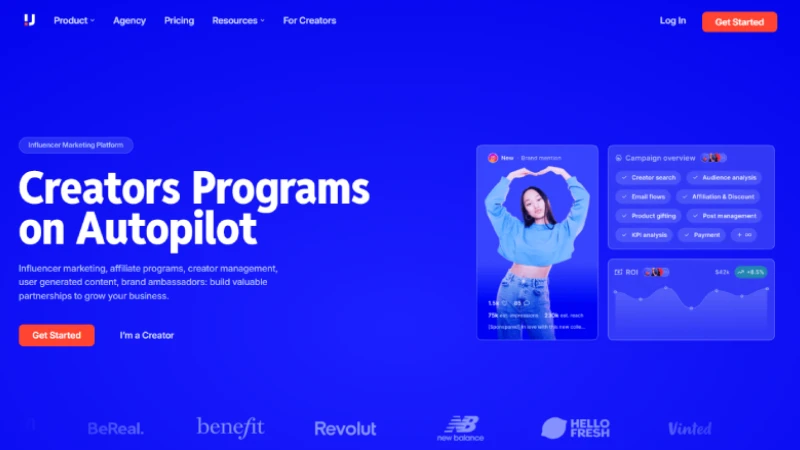
Upfluence is the pick when influencer outreach needs to prove it made money. Attribution through discount codes and affiliate links connects creator activity straight to sales data, so instead of arguing about engagement rates you are looking at revenue contribution. For commerce teams that treat creator marketing as a performance channel, that is the entire ballgame.
The feature scores are the highest in this comparison. Content scheduling sits at 98%, curation at 96%, and automatic follow-up at 95%. Reviewers describe launching outreach to 150 or more influencers within hours and keeping follow-up discipline without manually tracking replies.
Live Capture is the standout. It identifies potential influencers from inside your existing customer database, which means you are recruiting from proven buyers rather than cold-pitching strangers. Paired with Shopify and Klaviyo integrations, a brand can stand up a functioning creator network in days.
Consolidation is the other draw. Outreach, communications, product shipping, commissions, contracts, and payments all run in one place. Teams migrating off a stack of four tools describe that as the reason they stay.
The cost of that breadth is setup time. Configuring multiple modules takes longer than expected, especially for agencies handling several brands at once. Attribution also needs time to stabilize before the numbers are defensible, which pressures agencies working to short client timelines more than in-house teams. And there is no public pricing, so budgeting means a sales call.
Pros & Cons
| PROS | CONS |
|---|---|
| Direct revenue attribution via affiliate links and discount codes | No public pricing, custom quote required |
| Live Capture finds influencers inside your customer database | Multi-module setup takes longer than expected |
| Highest feature scores here: 98% scheduling, 96% curation | Attribution needs time to become defensible at scale |
| Shopify and Klaviyo integrations for commerce teams | Not suited to link building or blog outreach |
| Handles contracts, shipping, commissions, and payments | Learning curve requires several onboarding sessions |
| Bulk outreach to 150+ creators in hours | Heavier than most small teams need |
What the Community Says
“Was able to find 150 influencers to reach out to within a few hours and then make a campaign for bulk outreach. I liked the automated follow-up emails if an influencer didn’t answer.” – Rachael B., G2 review
BEST FOR Ecommerce and DTC brands running creator programs where revenue attribution matters more than reach metrics.
READ MORE: How to Download YouTube Videos
6. Postaga
AI That Builds the Campaign, Not Just the Email
Our Score: 8.2/10
Quick Facts
| Pricing | Pro: $99/mo ($84 annual) | Agency: $299/mo ($250 annual) |
| Platform | Web-based |
| Category | AI Outreach / Link Building |
| Skill Level | Beginner |
| Free Plan | Free version and 14-day trial |
| Developer | Postaga |
Detailed Review
Postaga sits in a useful middle ground. It costs less than Pitchbox, does more than a bare email finder, and its AI actually does something interesting: it generates the campaign angle, not just the copy. You give it a URL or a topic, it suggests outreach opportunity types, finds relevant prospects, pulls contact details, and drafts personalized sequences around a specific hook.
The Pro plan at $99 a month covers 10,000 emails, 1,000 opportunity searches, 2,000 contacts, and 300 daily sends per user. For a solo consultant or a small in-house team that is enough runway to run a real link building program without an agency budget. The Agency plan at $299 scales to 30 accounts and 100,000 emails.
The Opportunity Finder is the differentiator. Rather than making you decide what kind of campaign to run, it identifies angles you might not have considered: skyscraper targets, podcast guest spots, roundup inclusions, unlinked mentions. That structure is genuinely helpful when you are new to outreach and staring at a blank campaign screen.
The limits show up at scale. The two-plan structure leaves a wide gap between $99 and $299 with nothing in between, and reviewers describe that jump as awkward. Contact data quality is decent but not at Respona or Pitchbox level, so budget verification time. And it lacks the relationship history depth of BuzzStream, which makes it better for campaign-based work than for maintaining publisher relationships across years.
Pros & Cons
| PROS | CONS |
|---|---|
| AI generates campaign angles, not just email copy | Only two plans, with a big gap between $99 and $299 |
| Genuine free version plus a 14-day trial | Contact data less reliable than Respona or Pitchbox |
| $99/mo covers 10,000 emails and 2,000 contacts | Weak relationship history compared to BuzzStream |
| Opportunity Finder surfaces campaign types you would miss | Reporting is basic |
| Fast setup with almost no learning curve | Smaller integration ecosystem |
| Good value for solo SEOs and small in-house teams | Strains past a few hundred active conversations |
What the Community Says
Reviewers on Capterra consistently describe Postaga’s pricing as a bargain for the value, though some early-stage startups still find the entry cost high relative to their budget. See Postaga on Capterra.
BEST FOR Solo SEOs, freelancers, and small in-house teams who want AI-assisted campaign building without an agency-tier subscription.
7. Hunter
The Budget Entry Point for Finding and Verifying Blogger Emails
Our Score: 7.9/10
Quick Facts
| Pricing | Free | Starter: $49/mo ($34 annual) | Growth: $149/mo ($104 annual) | Scale and Enterprise above |
| Platform | Web-based, plus Chrome extension and API |
| Category | Email Finder / Lightweight Outreach |
| Skill Level | Beginner |
| Free Plan | Yes, limited monthly credits |
| Developer | Hunter |
Detailed Review
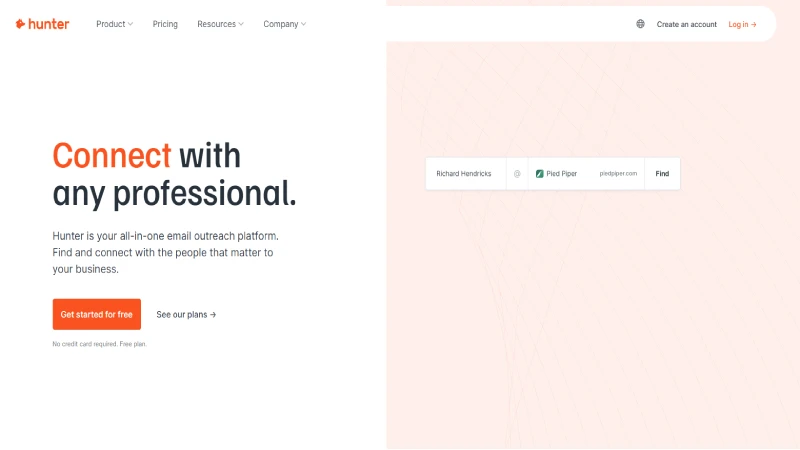
Hunter is not a full outreach platform and it is better for admitting that. What it does is find and verify email addresses better than almost anything else, then give you a competent Campaigns module to actually send from. For a lot of teams starting out, that combination is all they need.
The free plan gives you enough credits to test the workflow properly, which none of the dedicated outreach platforms offer. Starter at $49 a month brings 2,000 credits, three connected email accounts, auto-verification on every find, lead enrichment, and the AI writing assistant. Growth at $149 lifts that to 10,000 credits and 10 accounts. Credits work simply: one to find an email, half to verify one.
The verification is the real value. Bounce rates wreck sender reputation, and Hunter’s auto-verification catches bad addresses before they cost you deliverability. That is also why BuzzStream integrates Hunter directly rather than building its own finder.
Campaigns handles sequences and follow-ups adequately, with recipient limits of 2,500 on Starter and 5,000 on Growth. It will run a straightforward three-step blogger outreach sequence without complaint.
What it will not do is manage relationships. There is no publisher history, no link monitoring, no placement tracking, no niche blog discovery. You bring the prospect list; Hunter finds the addresses and sends the emails. Most teams that grow past a few hundred pitches a month end up pairing it with BuzzStream or replacing it with Respona.
Pros & Cons
| PROS | CONS |
|---|---|
| Genuinely usable free plan to test with | Not a full outreach platform, no relationship tracking |
| Best-in-class email verification, protects sender reputation | No blogger or publisher discovery |
| $49/mo Starter is the cheapest paid entry here | No link monitoring or placement tracking |
| Chrome extension and API for flexible workflows | Credit model can get expensive at high volume |
| Unlimited team members sharing one credit pool | Reporting is thin compared to dedicated tools |
| Integrates into BuzzStream and most outreach stacks | You have to build the prospect list yourself |
What the Community Says
BuzzStream integrates Hunter’s email finder natively rather than building its own, which is a fair signal about where the verification strength sits in this category.
BEST FOR Freelancers, startups, and teams who already have a prospect list and need reliable email discovery plus basic sending on a small budget.
Full Comparison Table: All 7 Blogger Outreach Tools
| Platform | Starting Price | Free Plan | Best For | G2 Rating | Score |
|---|---|---|---|---|---|
| Pitchbox | $165/mo | Trial only | High-volume link building | 4.7/5 | 9.4 |
| Respona | ~$99/mo | Trial only | Content-led SEO outreach | 4.8/5 | 9.2 |
| BuzzStream | $24/mo | Trial only | Relationship management | 4.2/5 | 8.9 |
| Sprout Social IM | $199/seat/mo | Trial only | Enterprise creator programs | 4.3/5 | 8.6 |
| Upfluence | Custom quote | No | Ecommerce creator revenue | 4.6/5 | 8.5 |
| Postaga | $99/mo | Yes | AI campaigns on a budget | 4.4/5 | 8.2 |
| Hunter | $49/mo | Yes | Email finding and verification | 4.4/5 | 7.9 |
Buyer’s Guide: Which Blogger Outreach Tool Is Right for You?
By Outreach Goal
Link Building and SEO Pitchbox if you are running volume across multiple clients. Respona if you are one team running campaigns tied to your own content. BuzzStream if placement tracking and publisher relationships matter more than send volume.
Digital PR and Media Relations BuzzStream for relationship history and placement monitoring. Pitchbox if your PR program runs at agency scale with multiple concurrent campaigns.
Influencer and Creator Partnerships Sprout Social Influencer Marketing for governance, contracts, and stakeholder reporting. Upfluence if you are ecommerce and need revenue attribution rather than reach metrics.
Guest Posting and Content Placement Respona for the built-in strategy guidance. Postaga if the budget is tight and you want AI to help build the campaign.
By Budget
Under $50 a Month BuzzStream Starter at $24 or Hunter Starter at $49. Both are real tools, not trial-grade software, though both cap out quickly.
$99 to $165 a Month Respona Starter, Postaga Pro, BuzzStream Growth, or Pitchbox Pro. This band is where most serious small-team outreach programs land.
$300 and Above Pitchbox Advanced or Scale, BuzzStream Professional, Respona Unlimited, or the influencer platforms. Justified once outreach is a core revenue channel rather than a project.
By Team Size
Solo or Freelance Hunter or Postaga. Low commitment, free tiers to test with, enough capability to run real campaigns.
Small In-House Team Respona or BuzzStream Growth. Enough structure to keep two or three people from stepping on each other.
Agency Pitchbox. Multi-client campaign management, ownership clarity, and follow-up automation that holds at volume.
Enterprise or Multi-Stakeholder Sprout Social Influencer Marketing for creator programs, Pitchbox Enterprise for outreach at scale.
Frequently Asked Questions
What is the best blogger outreach software for beginners in 2026? Postaga or Hunter. Both have free tiers, minimal setup, and enough guidance that you can run a real campaign in your first week. Respona is the next step up once you want the full workflow in one place.
Which tool finds the highest-quality blogger prospects? Respona rates highest on blogger database quality at 92% against a category average of 87%, and Pitchbox rates 89% with broader coverage of publisher types. Both beat manual prospecting comfortably.
Do I need a separate email verification tool? Not if you use Respona, Pitchbox, or Hunter, all of which verify natively. BuzzStream integrates Hunter for this. Skipping verification is how sender reputation gets damaged, so do not run outreach without it.
Is Pitchbox worth $165 a month over BuzzStream at $24? Only if you are sending real volume. Below roughly 200 pitches a month, BuzzStream does the job for a tenth of the price. Above that, Pitchbox’s follow-up automation and pipeline visibility pay for themselves in saved hours.
What is the difference between blogger outreach and influencer marketing software? Blogger outreach tools like Pitchbox, Respona, and BuzzStream optimize for email sequences, link placements, and publisher relationships. Influencer platforms like Sprout Social and Upfluence optimize for creator discovery, contracts, payments, and social performance. They overlap in name only.
Can I run blogger outreach without dedicated software? At small volume, yes. Past about 50 active conversations, follow-ups start slipping and contact history fragments across inboxes. That is the point where a tool stops being optional.
Which tool has the best reporting? BuzzStream and Sprout Social get cited most for reporting that connects activity to actual outcomes rather than open rates. Pitchbox’s campaign analytics rate 95% and stay focused on outreach results without drowning you in dashboards.
Conclusion
After working through all seven, the picture is clear enough. Pitchbox is the strongest tool here if outreach is your core operation and you have the volume to justify it. Nothing else matches its follow-up discipline or pipeline visibility at scale. Respona is the better call for a single in-house team, with the highest satisfaction rating in the category and strategy guidance that most tools do not bother with.
BuzzStream deserves more attention than it gets. At $24 a month it is the cheapest real entry into structured outreach, and its relationship memory is something the flashier tools have not replicated. If you are pitching the same publishers year after year, that matters.
The influencer platforms, Sprout Social and Upfluence, solve a different problem well. Judge them on creator program governance and revenue attribution, not on link building, and they hold up. Postaga and Hunter are the honest budget picks, good enough to run real campaigns and cheap enough to test without a procurement conversation.
One last thing worth saying. Every tool on this list will send an email. None of them will make a stranger care about your content. The software removes friction from a process that still depends on pitching something worth publishing to someone who has a reason to publish it. Pick the tool that matches your volume and budget, then spend the time you save on the pitch itself.
