

We analyzed every major investment app and brokerage platform – from commission-free trading apps to robo-advisors and micro-investing tools. Here’s which ones are actually worth trusting with your money.

Investing in 2026 has never been more accessible. Commission-free trading is now the universal standard, fractional shares let you invest with as little as $1, and AI-powered robo-advisors can build and manage a diversified portfolio for you automatically. Whether you’re a complete beginner looking to invest your first $100 or an experienced trader who needs professional-grade charting tools, there’s an app designed specifically for you.
But the sheer number of options can be overwhelming. Legacy brokerages like Fidelity and Charles Schwab now offer slick mobile apps alongside their decades of institutional expertise. Mobile-first platforms like Robinhood and Webull have matured beyond their early controversies into legitimate, feature-rich trading platforms. Robo-advisors like Wealthfront and Betterment handle portfolio construction and tax optimization automatically. And micro-investing apps like Acorns let you invest your spare change without thinking about it.
We analyzed every major platform using data from NerdWallet, Forbes Advisor, Bankrate, StockBrokers.com, The Motley Fool, and real user reviews from Reddit’s r/investing, r/personalfinance, and r/stocks. We evaluated commission structures, account minimums, investment selection, platform quality, educational resources, customer support, and overall value. This guide covers 15 platforms across every investing style and experience level.
Quick Verdict – Our Top 4 Picks
| Category | Winner | Why |
|---|---|---|
| 🏆 Best Overall | Fidelity | $0 commissions, perfect scores across the board |
| 🎯 Best for Beginners | Robinhood | Sleekest app, IRA match, crypto + stocks |
| ⭐ Best Robo-Advisor | Wealthfront | 0.25% fee, tax-loss harvesting, DIY + automated |
| 💰 Best for Active Trading | Charles Schwab | thinkorswim platform, 300+ branches |
How We Tested and Ranked
Every platform was evaluated across seven criteria: trading costs and fee transparency, investment selection (stocks, ETFs, mutual funds, bonds, options, crypto), platform and app quality, educational resources and research tools, account types offered (taxable, IRA, custodial, 529), customer support accessibility, and real user sentiment from financial review platforms and Reddit communities.
1. Fidelity
Score: 9.6/10
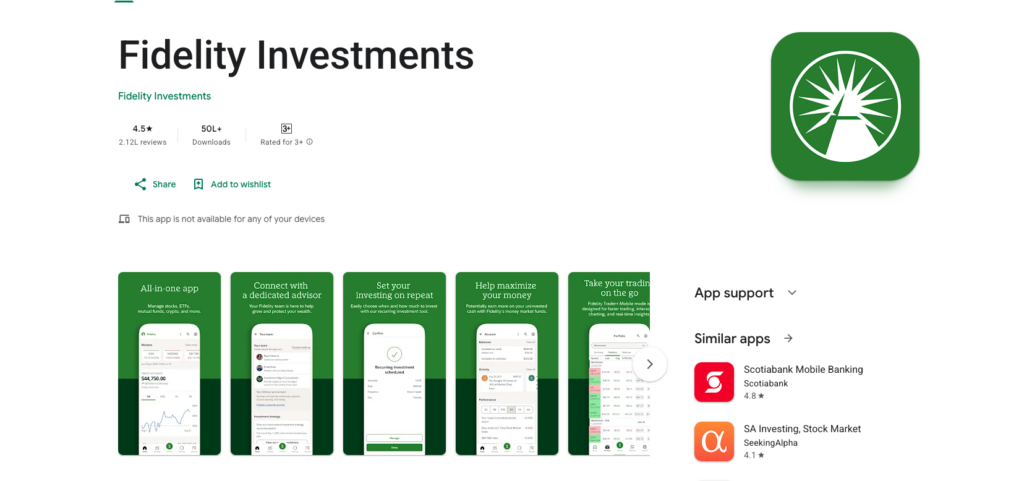
The do-it-all platform that scores perfectly everywhere
| Price | $0 commissions on stocks, ETFs, and options |
| Platform | Web, iOS, Android, Desktop |
| Skill Level | All levels – Beginner to Advanced |
| Account Minimum | No minimum deposit; $0 to open account |
Every year when NerdWallet evaluates Fidelity, they arrive at the same conclusion: Fidelity really does have everything most investors want and very little they don’t. The platform consistently earns perfect scores across virtually every category – fees, education, research, customer service, and platform quality.
For beginners, Fidelity offers an exceptionally clean app with consolidated research, a notebook feature for saving investing ideas, and extensive educational content. The platform seamlessly integrates retirement accounts (including 401(k)s administered through Fidelity) so you can see your entire financial picture in one place. Fidelity also offers several zero-expense-ratio index funds, which is extremely rare in the industry.
Active traders benefit from Fidelity’s Active Trader Pro desktop platform, real-time analytics, customizable screeners, and access to extensive third-party research from providers like Zacks and Argus. The mobile app supports fractional shares starting at $1 and cryptocurrency trading. High order execution quality means you’re consistently getting good prices on trades.
Bankrate named Fidelity their best broker for beginners in 2026. StockBrokers.com ranked it best for Research, Education, Beginners, and Retirement Accounts. NerdWallet gave it a 2026 Best-of Award. The customer service – available by phone, chat, and at 200+ investor centers nationwide – consistently earns top marks.
| STRENGTHS | WEAKNESSES |
|---|---|
| ✓ $0 commissions on stocks, ETFs, and options ✓ Zero-expense-ratio index funds (rare) ✓ Exceptional educational content and research ✓ Strong mobile app and desktop platform ✓ 200+ investor centers for in-person support ✓ High order execution quality ✓ Fractional shares starting at $1 | ✗ Active Trader Pro desktop feels dated ✗ Cryptocurrency selection more limited than some rivals ✗ Website navigation can be complex for beginners ✗ Cash sweep rate lower than some competitors |
“Every year Fidelity receives a perfect score in our rubric, and invariably we arrive at the same conclusion that Fidelity really does have everything most investors want and very little they don’t.”
– NerdWallet editorial team (2026)
Best For: Nearly everyone – beginners, retirement investors, active traders, and long-term buy-and-hold investors
2. Charles Schwab
Score: 9.5/10
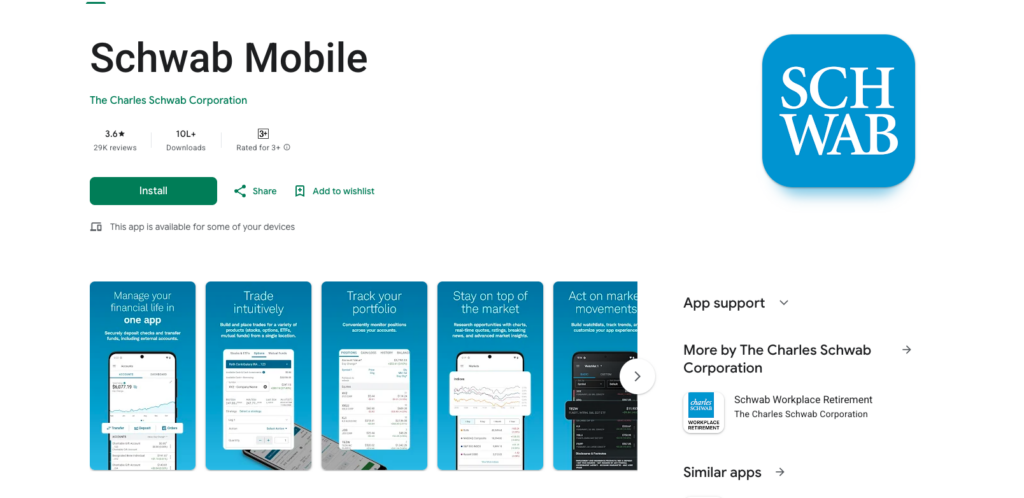
The industry standard that does everything well
| Price | $0 commissions on stocks, ETFs, and options |
| Platform | Web, iOS, Android, Desktop (thinkorswim) |
| Skill Level | All levels – Beginner to Advanced |
| Account Minimum | No minimum deposit; new investors get $50 to invest |
Charles Schwab retained the #1 Overall ranking on StockBrokers.com for 2026, and for good reason. Following the full integration of TD Ameritrade, Schwab now offers a dual-platform approach: the flagship web and mobile experience for everyday investing, plus the legendary thinkorswim (TOS) platform for active trading. From buying a first fractional share to managing a multimillion-dollar estate, Schwab provides tools for every need.
The thinkorswim platform is widely regarded as the most powerful retail trading platform available, with advanced charting, 400+ technical indicators, real-time streaming data, economic data integration, and paper trading for practice. Schwab’s research is rated Best in Class, with actionable daily updates and deep fundamental data. Education includes webinars, videos, courses, and a paper trading simulator.
Schwab offers the broadest investment selection among major brokers: stocks, ETFs, over 4,000 no-transaction-fee mutual funds, individual bonds (150,000+ available with $0 commissions on Treasuries), options, futures, and cryptocurrency exposure through ETFs. Over 300 physical branches provide in-person support that purely digital brokers can’t match.
NerdWallet selected Schwab as their 2026 Best-of Award winner for IRA investors. The main drawbacks: fractional shares are limited to S&P 500 companies via Stock Slices, base margin rates are higher than discount competitors, and the mobile app can feel slightly clunky compared to Robinhood’s streamlined interface.
| ✓ STRENGTHS | ✗ WEAKNESSES |
|---|---|
| ✓ thinkorswim: most powerful retail trading platform ✓ Broadest investment selection in the industry ✓ 300+ physical branches nationwide ✓ Paper trading for practice without risking money ✓ 150,000+ bonds; $0 on Treasuries ✓ Top-tier research and education | ✗ Fractional shares limited to S&P 500 ✗ Higher base margin rates than competitors ✗ Mobile app less sleek than newer platforms ✗ No spot crypto trading (ETFs and futures only) |
“I opened my Schwab account as a brand-new investor and I’ve learned a lot through the educational resources available. The customer service support and Schwab Financial Consultant have been tremendously helpful.”
– Employee reviewer, The Motley Fool (2026)
🎯 Best For: All-in-one investors who want everything under one roof, active traders needing thinkorswim, and those who value in-person branch support
3. Robinhood
Score: 9.1/10
The app that made investing cool – and has matured into a legitimate platform
| Price | $0 commissions on stocks, ETFs, options, and crypto |
| Platform | iOS, Android, Web |
| Skill Level | Beginner to Intermediate |
| Account Minimum | No minimum deposit; IRA with 1% match (3% for Gold members at $5/mo) |
Robinhood is well-known for its excellent app – the platform is clean, intuitive, and designed specifically for beginner investors. NerdWallet chose Robinhood as the best overall stock app for beginners because of how approachable the interface is. Trading windows are generous, educational offerings have expanded significantly, and the research tools have improved substantially since the platform’s early days.
The IRA with employer-style match is Robinhood’s standout feature in 2026. At 1% match (3% for Gold members at $5/month), Robinhood effectively gives you free money on retirement contributions. For Gold members contributing the maximum $7,000 to an IRA, that’s $225 in match – treated as interest income, not counting toward your contribution limit. Robinhood also offers high interest rates on uninvested cash for Gold members.
The platform supports stocks, ETFs, options, and one of the widest cryptocurrency selections among conventional brokers. Fractional shares let you invest with as little as $1. The Robinhood Legend desktop platform (launched 2025) added 90+ technical indicators for more advanced traders, and 24-hour trading on hundreds of securities expanded accessibility.
The main concerns: Robinhood still generates significant revenue from payment for order flow, which some argue creates a conflict of interest. There are no mutual funds, limited third-party research, no bonds, and no custodial or trust accounts. Reddit’s r/investing community has mixed feelings – praising the accessibility while cautioning that the gamified interface can encourage impulsive trading.
| ✓ STRENGTHS | ✗ WEAKNESSES |
|---|---|
| ✓ Sleekest, most intuitive investing app ✓ IRA with 1–3% match (effectively free money) ✓ Wide cryptocurrency selection ✓ $0 commissions on everything including crypto ✓ Fractional shares from $1 ✓ 24-hour trading on many securities | ✗ No mutual funds or bonds ✗ Limited third-party research ✗ Revenue from payment for order flow ✗ Gamified interface may encourage impulsive trading ✗ No custodial or trust accounts |
“Robinhood, for better or worse, makes investing fun and incredibly accessible. If you get bogged down with old-fashioned platforms, Robinhood may be a good choice for you.”
– NerdWallet review (2026)
🎯 Best For: First-time investors wanting the easiest possible start, crypto enthusiasts, and anyone who values a beautiful mobile experience
4. Wealthfront
Score: 9.0/10

The smartest hands-off investing experience
| Price | 0.25% annual advisory fee |
| Platform | Web, iOS, Android |
| Skill Level | Beginner (hands-off investors) |
| Free Trial/Offer | $500 minimum deposit |
Wealthfront is NerdWallet’s highest-scoring robo-advisor and their 2026 Best-of Award winner for portfolio options. The platform automatically builds and manages a diversified portfolio based on your goals, time horizon, and risk tolerance, using low-cost ETFs with an average expense ratio of just 0.08%.
Tax-loss harvesting runs daily (not just quarterly like some competitors), which can add meaningful returns over time. The diversified portfolio spans up to 18 ETFs across nine asset classes. Wealthfront also offers 529 college savings plans – a rare feature among robo-advisors. Their financial planning tools provide a comprehensive view of your financial health.
A unique addition: Wealthfront now offers DIY stock investing alongside its managed portfolios. You can purchase individual stocks, ETFs, and REITs through curated collections or individual picks – with no additional fees or commissions. This hybrid approach is rare among robo-advisors.
The $500 minimum deposit is higher than some competitors (Betterment has no minimum). There are no human financial advisors available, even for an extra fee. But for hands-off investors who want sophisticated tax optimization without paying for a human advisor, Wealthfront is hard to beat.
| ✓ STRENGTHS | ✗ WEAKNESSES |
|---|---|
| ✓ Daily tax-loss harvesting (industry-leading) ✓ Low 0.25% advisory fee ✓ 529 college savings plans (rare for robo-advisors) ✓ DIY stock investing alongside managed portfolios ✓ Sophisticated financial planning tools ✓ Average ETF expense ratio of 0.08% | ✗ $500 minimum deposit ✗ No human financial advisors ✗ Not suitable for active traders ✗ Limited customization vs. self-directed brokers ✗ No crypto trading |
“Wealthfront has come out at or near the top of NerdWallet’s robo-advisor rankings every year, and it’s easy to see why: it has consistently leveled up its offering with new features and a wider investment selection.”
– NerdWallet editorial review (2026)
🎯 Best For: Hands-off investors wanting automated portfolio management with tax optimization, and anyone saving for college via 529 plans
READ MORE: Best Accounting Software for Small Business in 2026
5. Betterment
Score: 8.8/10
The original robo-advisor, still among the best
| Price | 0.25% annual fee (Digital) / 0.65% (Premium with advisor access) |
| Platform | Web, iOS, Android |
| Skill Level | Beginner |
| Account Minimum | No minimum deposit (Digital); $100,000 minimum (Premium) |
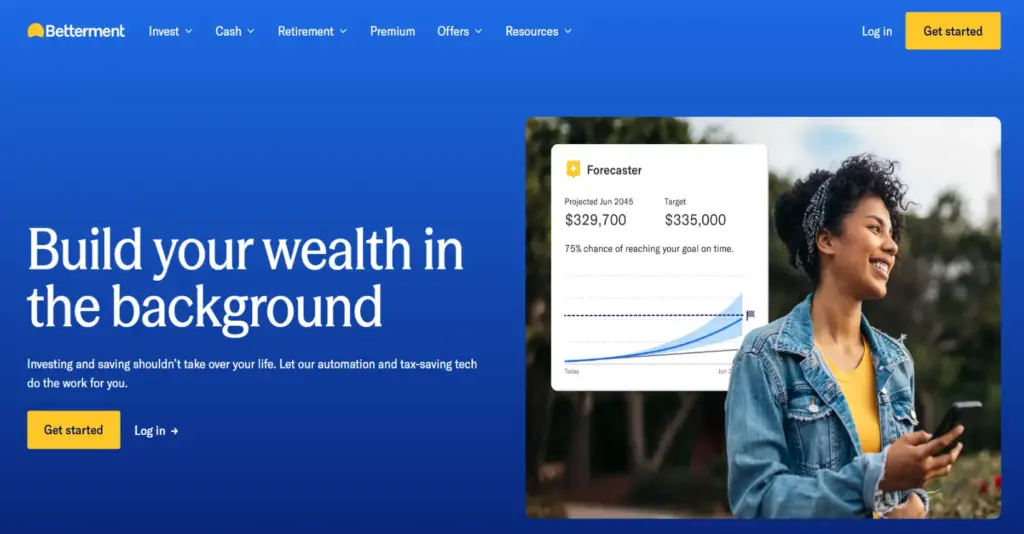
Betterment pioneered the robo-advisor category and remains one of the most trusted names in automated investing, managing over $40 billion in assets. Getting started takes just $10, and the app makes it extremely easy to build a diversified, long-term portfolio. NerdWallet included Betterment on their list of best investment apps for beginners specifically for hands-off, long-term investing.
Betterment’s portfolios include 14 different asset classes – six stock funds and eight bond funds – held in low-cost ETFs. Tax-loss harvesting is available on all taxable accounts. The Premium tier ($100,000 minimum, 0.65% fee) includes access to certified financial planners for personalized advice.
The platform offers socially responsible investing (SRI) portfolios, crypto portfolios, and income-focused portfolios. Cash Reserve accounts earn competitive APY. The interface is clean, goal-based, and designed to discourage emotional trading during market downturns.
| ✓ STRENGTHS | ✗ WEAKNESSES |
|---|---|
| ✓ No minimum deposit for Digital tier ✓ Goal-based interface discourages emotional trading ✓ SRI and crypto portfolio options ✓ Access to CFPs on Premium tier ✓ Tax-loss harvesting on all taxable accounts | ✗ 0.25% fee adds up on larger balances ✗ No individual stock trading ✗ Premium tier requires $100K minimum ✗ Limited investment customization ✗ No 529 plan option (unlike Wealthfront) |
“For anyone looking for a long-term, hands-off investing app, Betterment is among the best. Customers can get started for just $10.”
– NerdWallet review (2026)
🎯 Best For: Set-it-and-forget-it investors, those wanting access to human financial advisors (Premium), and socially responsible investors
6. Vanguard
Score: 8.7/10
The low-cost investing pioneer trusted by millions
| Price | $0 commissions on stocks and ETFs; some mutual fund fees apply |
| Platform | Web, iOS, Android |
| Skill Level | Beginner to Intermediate |
| Account Minimum | No minimum for brokerage; $1,000–$3,000 for some mutual funds |
Vanguard is synonymous with low-cost, long-term investing. The company invented the index fund and still offers some of the lowest expense ratios in the industry. For buy-and-hold investors building retirement wealth through index funds and ETFs, Vanguard remains the gold standard.
NerdWallet notes that Vanguard is the king of low-cost investing, ideal for buy-and-hold and retirement investors. The fund selection is outstanding, with top-notch proprietary index funds, ESG options, and target-date retirement funds. The company’s unique ownership structure (owned by the funds themselves, which are owned by shareholders) means it’s incentivized to keep costs low.
The main drawback: Vanguard’s platforms and apps feel dated compared to modern competitors. Active traders will find the tools insufficient, and the website navigation can be frustrating. Customer service has also drawn complaints. But for investors who prioritize low fees and long-term growth, these trade-offs are worth it.
| ✓ STRENGTHS | ✗ WEAKNESSES |
|---|---|
| ✓ Lowest expense ratios in the industry ✓ Invented the index fund; unmatched fund selection ✓ Unique ownership structure aligns with investors ✓ Excellent target-date retirement funds ✓ Strong ESG fund options | ✗ Dated platform and mobile app ✗ Poor experience for active traders ✗ Some mutual funds require $1K–$3K minimums ✗ Customer service has drawn complaints ✗ No crypto trading |
🎯 Best For: Long-term, buy-and-hold investors focused on low-cost index funds and retirement savings
7. E*TRADE (Morgan Stanley)
Score: 8.6/10
Excellent education meets powerful trading tools
| Price | $0 commissions on stocks, ETFs, and options |
| Platform | Web, iOS, Android, Desktop (Power E*TRADE) |
| Skill Level | Beginner to Advanced |
| Account Minimum | No minimum deposit |
E*TRADE from Morgan Stanley has long been one of the most popular online brokers, and the Morgan Stanley backing adds institutional credibility and resources. The platform stands out for its exceptional educational materials – webinars, videos, articles, daily webcasts, and Bloomberg TV embedded into all trading platforms.
For active traders, Power E*TRADE offers advanced charting, options analysis tools, and volume discounts on options contracts. The general platform provides an excellent selection of research tools and a wide investment selection including stocks, ETFs, mutual funds, bonds, and options. NerdWallet rates E*TRADE’s educational resources among the best available.
The drawbacks: no fractional shares, low interest on uninvested cash, and the website can be difficult to navigate for true beginners. But the depth of educational hand-holding more than compensates for the initial learning curve.
| ✓ STRENGTHS | ✗ WEAKNESSES |
|---|---|
| ✓ Outstanding educational resources (webinars, videos, Bloomberg TV) ✓ Power E*TRADE for advanced traders ✓ Volume discount on options contracts ✓ Morgan Stanley institutional backing ✓ Wide investment selection | ✗ No fractional shares ✗ Low interest on uninvested cash ✗ Website navigation can be confusing ✗ Platform can intimidate beginners initially |
🎯 Best For: Investors who value education and want to learn while trading, and options traders seeking volume discounts
8. SoFi Active Investing
Score: 8.5/10
Modern banking meets commission-free investing
| Price | $0 commissions on stocks, ETFs, and options |
| Platform | Web, iOS, Android |
| Skill Level | Beginner |
| Account Minimum | No minimum deposit |
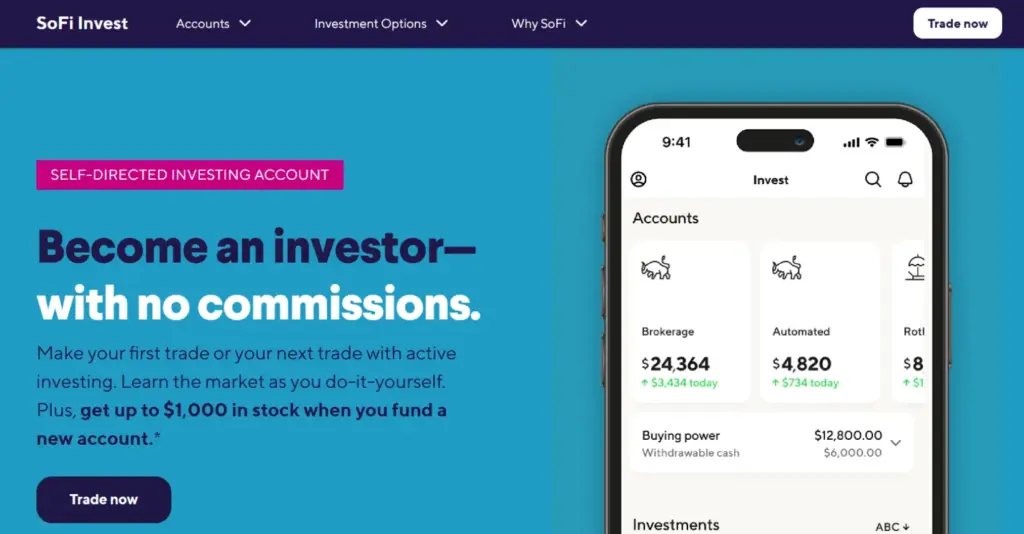
SoFi has built a comprehensive financial ecosystem – banking, lending, and investing all under one roof. The investing platform offers $0 commissions, fractional shares, IPO access (rare for retail investors), and a wide mutual fund selection. The interface is designed for newer investors with a clean, approachable design.
SoFi members get access to complimentary financial planning sessions and career coaching. The all-in-one financial approach means you can manage checking, savings, loans, and investments from a single app. Cryptocurrency trading is also available.
NerdWallet rates SoFi highly for beginners, noting that $0 commissions and the broad investment selection make it attractive for new investors. The main limitations: research tools are basic compared to Schwab or Fidelity, and the trading platform lacks advanced features for experienced traders.
| ✓ STRENGTHS | ✗ WEAKNESSES |
|---|---|
| ✓ $0 commissions + fractional shares ✓ IPO access (rare for retail) ✓ All-in-one financial ecosystem ✓ Complimentary financial planning sessions ✓ Wide mutual fund selection | ✗ Basic research and analysis tools ✗ Not suitable for advanced traders ✗ Limited customization options ✗ Relatively new platform (less track record )✗ Crypto selection narrower than specialists |
🎯 Best For: Beginners wanting an all-in-one financial app, and anyone interested in IPO access
9. M1 Finance
Score: 8.3/10
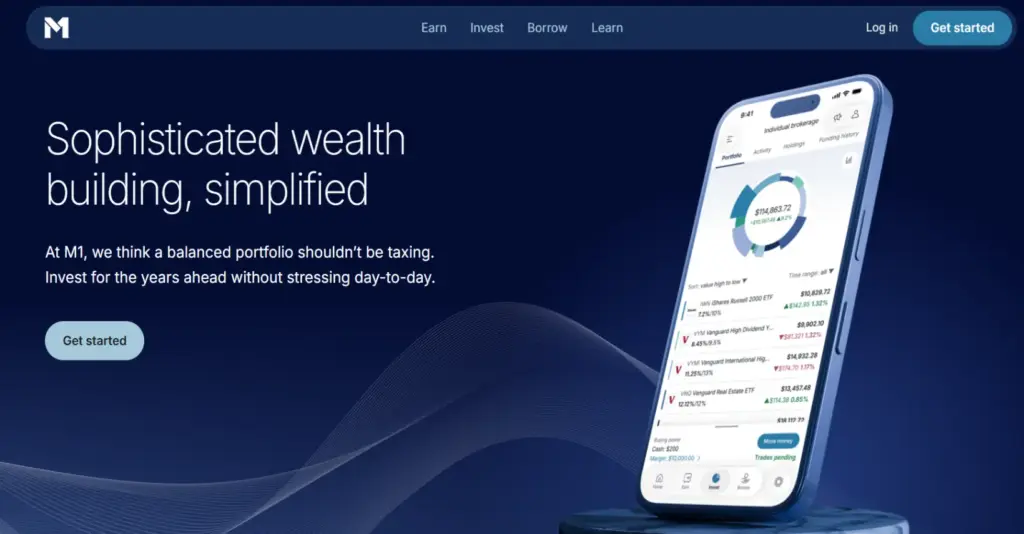
Build your perfect portfolio with “pies”
| Price | $3/mo platform fee (M1 Plus available) |
| Platform | Web, iOS, Android |
| Skill Level | Beginner to Intermediate |
| Account Minimum | No minimum for taxable accounts; $500 for retirement accounts |
M1 Finance offers a unique investing experience through its “pie” system – customizable portfolio visualizations where each slice represents a stock or ETF. You can build your own portfolio or choose from expert-designed pies matched to your goals and risk tolerance. The platform automatically rebalances your portfolio with each new deposit.
M1 combines elements of self-directed investing with robo-advisor automation. Expert pies provide professionally designed portfolios for those who don’t want to pick stocks, while custom pies give full control to those who do. Fractional shares are supported, and the platform handles tax-efficient selling automatically.
The $3/month platform fee is the main concern – for small accounts, this percentage is high relative to the account balance. Trading windows are limited (one or two per day), making M1 unsuitable for day trading. But for long-term investors who want a hybrid of automation and control, M1’s approach is genuinely unique.
| ✓ STRENGTHS | ✗ WEAKNESSES |
|---|---|
| ✓ Unique “pie” portfolio visualization ✓ Expert pies for hands-off investing ✓ Automatic rebalancing with each deposit ✓ Fractional shares supported ✓ Hybrid: self-directed + automated | ✗ $3/month platform fee ✗ Limited trading windows (not for day traders) ✗ $500 minimum for retirement accounts ✗ Fewer research tools than major brokers ✗ Smaller brand recognition |
🎯 Best For: Long-term investors wanting a visual, customizable portfolio with automatic rebalancing
10. Webull
Score: 8.2/10

Advanced charting meets commission-free trading
| Price | $0 commissions on stocks, ETFs, and options |
| Platform | Web, iOS, Android, Desktop |
| Skill Level | Beginner to Intermediate |
| Account Minimum | No minimum deposit |
Webull offers surprisingly powerful charting and technical analysis tools for a commission-free platform. NerdWallet rated it best for practice investing thanks to its excellent paper trading feature, which lets you simulate trades with virtual money before risking real capital. The platform supports stocks, ETFs, options, and cryptocurrency trading.
Each stock page includes comprehensive data with links to news, third-party content, and social sentiment from other traders. Fractional shares are available starting at $1, and instant funding gets your account working immediately. The desktop platform provides advanced charting comparable to paid tools.
The main weakness: educational resources are severely lacking compared to Fidelity, Schwab, or E*TRADE. The platform looks impressive, but without guidance, beginners may struggle to use the advanced features effectively. Research tools are also more limited than legacy brokers.
| ✓ STRENGTHS | ✗ WEAKNESSES |
|---|---|
| ✓ Excellent paper trading for practice ✓ Advanced charting tools (free) ✓ Commission-free stocks, ETFs, options, crypto ✓ Fractional shares from $1 ✓ Strong social trading features | ✗ Educational resources severely lacking ✗ Limited research compared to legacy brokers ✗ Less established brand ✗ Customer service can be slow✗ Crypto in separate app (Webull Pay) |
🎯 Best For: Visual learners who want to practice with paper trading before investing real money
11. Public
Score: 8.0/10
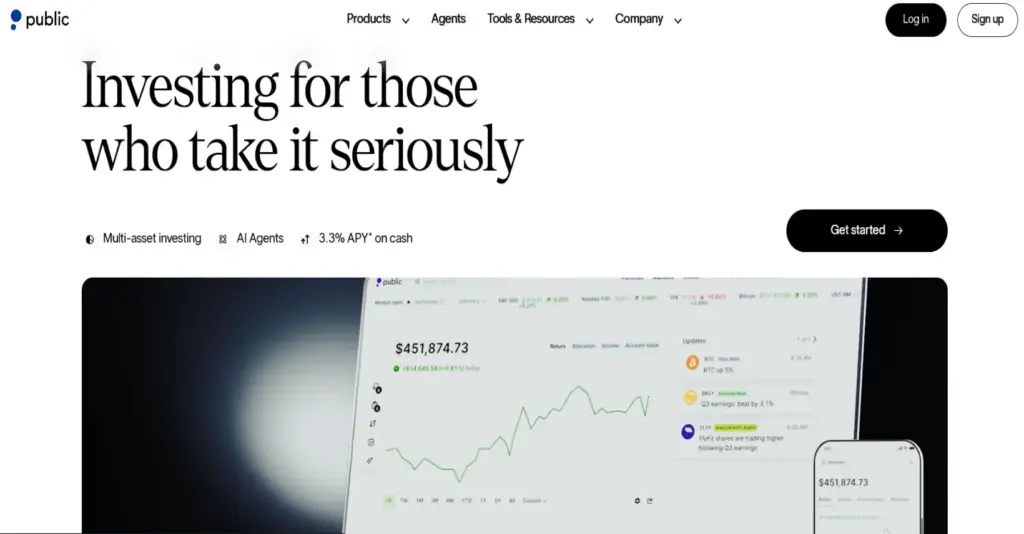
Investing meets community and Treasury access
| Price | $0 commissions on stocks and ETFs; options available |
| Platform | iOS, Android, Web |
| Skill Level | Beginner |
| Account Minimum | No minimum deposit |
Public stands out for its Treasury account, which is a rare offering among the apps reviewed by NerdWallet. You can invest directly in U.S. Treasury bills and earn competitive yields. The platform also appeals to beginner options traders through its intuitive Options Hub, which makes learning options trading approachable.
Public’s social features let you see what other investors are buying (with their permission), follow themed investing ideas, and access community discussions. The platform supports stocks, ETFs, options, crypto, and Treasury bills. The Investor’s Guild provides market education and analysis.
The trade-off: Public does not accept payment for order flow (which they market as an ethical stance), but this means order execution may not always match brokers that do. Research tools are less comprehensive than Fidelity or Schwab.
| ✓ STRENGTHS | ✗ WEAKNESSES |
|---|---|
| ✓ Treasury account for direct T-bill investing ✓ No payment for order flow (ethical stance) ✓ Intuitive Options Hub for beginners ✓ Social investing community features ✓ Multi-asset: stocks, ETFs, options, crypto, Treasuries | ✗ Less comprehensive research tools ✗ Smaller platform than major competitors ✗ Limited mutual fund access ✗ Order execution may lag brokers using PFOF ✗ No retirement account match |
🎯 Best For: Income-focused investors wanting Treasury access, and beginners interested in social investing
12. Interactive Brokers
Score: 8.5/10
The professional’s choice for global markets and low costs
| Price | $0 commissions (Lite) or low per-share rates (Pro) |
| Platform | Web, iOS, Android, Desktop (TWS) |
| Skill Level | Advanced |
| Account Minimum | No minimum deposit |
Interactive Brokers scored the highest among brokers on NerdWallet’s day trading roundup, with a platform designed for experienced, active traders. The Trader Workstation (TWS) desktop platform offers institutional-grade tools: advanced charting, algorithmic trading, real-time risk analytics, and access to 150+ global markets across 34 countries.
IBKR offers the lowest margin rates among mainstream brokers, making it the go-to for margin traders. The investment selection is virtually unlimited: stocks, ETFs, options, futures, forex, bonds, and crypto. The IBKR Lite tier provides commission-free US stock and ETF trades, while Pro offers better execution quality at small per-share costs.
StockBrokers.com rated IBKR as the best broker for professional and international trading. The main barrier: the platform is complex and intimidating for beginners. The mobile app, while feature-rich, can be prone to small technical hiccups.
| ✓ STRENGTHS | ✗ WEAKNESSES |
|---|---|
| ✓ Lowest margin rates among mainstream brokers ✓ Access to 150+ global markets ✓ Institutional-grade trading tools ✓ Best for options, futures, and forex trading ✓ IBKR Lite offers $0 commissions | ✗ Complex, intimidating for beginners ✗ Mobile app can have technical issues ✗ Customer service not beginner-friendly ✗ Platform has steep learning curve ✗ Overwhelming amount of features |
🎯 Best For: Experienced active traders, international investors, and anyone needing the lowest margin rates
13. Acorns
Score: 7.8/10
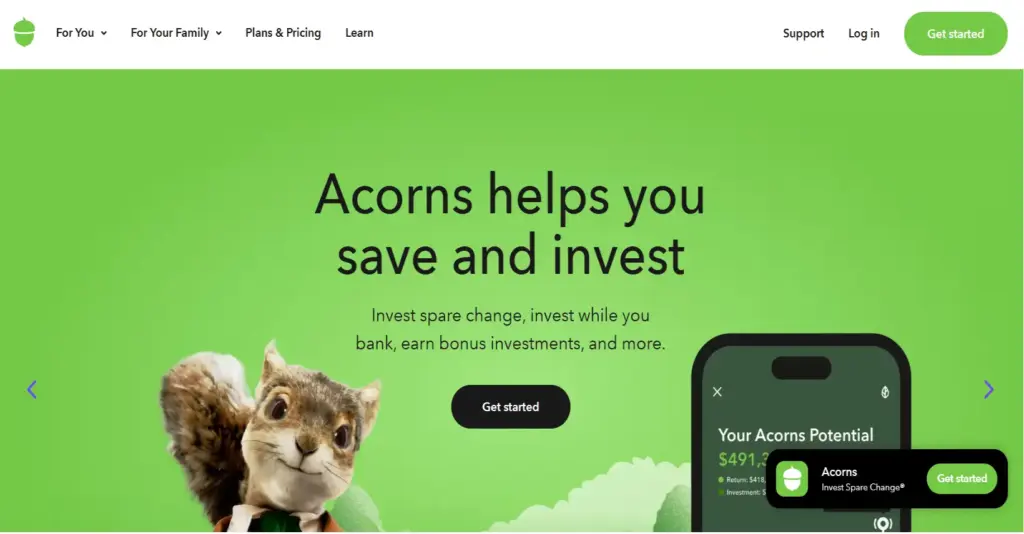
Invest your spare change without thinking about it
| Price | $3/mo (Personal) / $5/mo (Personal Plus) / $9/mo (Premium) |
| Platform | iOS, Android |
| Skill Level | Complete Beginner |
| Account Minimum | No minimum; starts investing at $5 of round-ups |
Acorns is the pioneer of micro-investing. Link your debit and credit cards, and Acorns rounds up every purchase to the nearest dollar, investing the spare change into a diversified portfolio of low-cost ETFs. It’s the easiest possible way to start investing – you literally build wealth through your normal spending habits.
Acorns determines your investment profile through a questionnaire and recommends one of five portfolios ranging from conservative to aggressive. The platform offers Acorns Later (retirement accounts), Acorns Checking (FDIC-insured with a Visa debit card), and Found Money (cashback from 350+ partners like Nike and Chevron deposited directly into your investment account).
The monthly fee structure is the main criticism. At $3/month for small balances, the fee represents a high percentage of your portfolio. For someone with a $500 balance, that’s 7.2% annually in fees – far more than any robo-advisor charges. Acorns becomes more cost-effective as your balance grows past $5,000.
| ✓ STRENGTHS | ✗ WEAKNESSES |
|---|---|
| ✓ Easiest possible way to start investing ✓ Round-up feature automates spare change investing ✓ Found Money cashback from 350+ partners ✓ Includes checking account and retirement options ✓ Beautiful, award-winning app design | ✗ Monthly fees expensive for small balances ✗ Very limited control over investments ✗ No individual stock trading ✗ Not suitable for experienced investors ✗ Slow wealth accumulation through round-ups alone |
“I use Robinhood and Acorns, and even though they serve different purposes, Acorns is probably the best for long-term results since you aren’t always buying and selling stocks.”
– Reddit user, r/investing
🎯 Best For: Complete beginners, non-savers who want to invest spare change, and anyone who wants 100% hands-off micro-investing
14. J.P. Morgan Self-Directed Investing
Score: 7.7/10
The banking giant’s clean investing experience
| Price | $0 commissions on stocks and ETFs |
| Platform | Web, iOS, Android (via Chase app) |
| Skill Level | Beginner |
| Account Minimum | No minimum deposit |
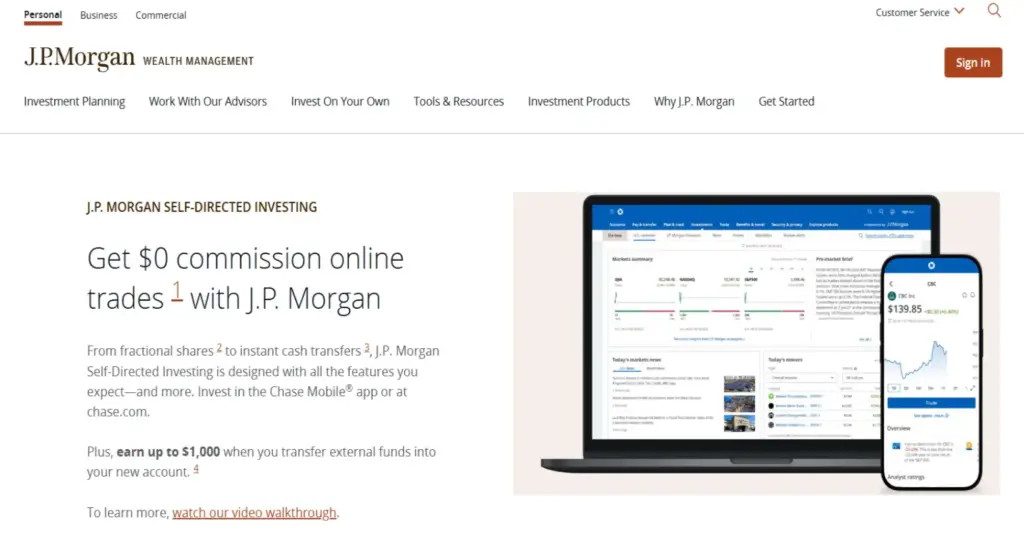
J.P. Morgan Self-Directed Investing is ideal for existing Chase banking customers who want investing and banking under one roof. The platform provides solid market context including indices, yield curves, commodities, currencies, and daily market briefs directly in the Chase mobile app.
StockBrokers.com noted that the app makes monitoring portfolios and placing stock/ETF trades easy, with well-written education and security-level research. The seamless integration with Chase checking, savings, and credit cards creates a unified financial dashboard.
The limitations are clear for more experienced investors: options tools are basic, there’s no crypto trading, no futures, and the research isn’t organized in an intuitive learning path. But for Chase customers wanting a simple entry into investing, the integration is hard to beat.
| ✓ STRENGTHS | ✗ WEAKNESSES |
|---|---|
| ✓ Seamless Chase banking integration ✓ Solid market context (indices, yields, currencies) ✓ Clean, easy-to-use interface ✓ No commissions on stocks and ETFs ✓ J.P. Morgan institutional backing | ✗ Basic options tools ✗ No crypto or futures trading ✗ Research not intuitively organized ✗ Limited advanced features ✗ Best only for existing Chase customers |
🎯 Best For: Existing Chase banking customers wanting seamless investing integration
15. Moomoo
Score: 7.5/10
Aggressive newcomer with professional tools at zero cost
| Price | $0 commissions on stocks, ETFs, and options |
| Platform | Web, iOS, Android, Desktop |
| Skill Level | Beginner to Intermediate |
| Account Minimum | No minimum deposit; aggressive promotional bonuses |
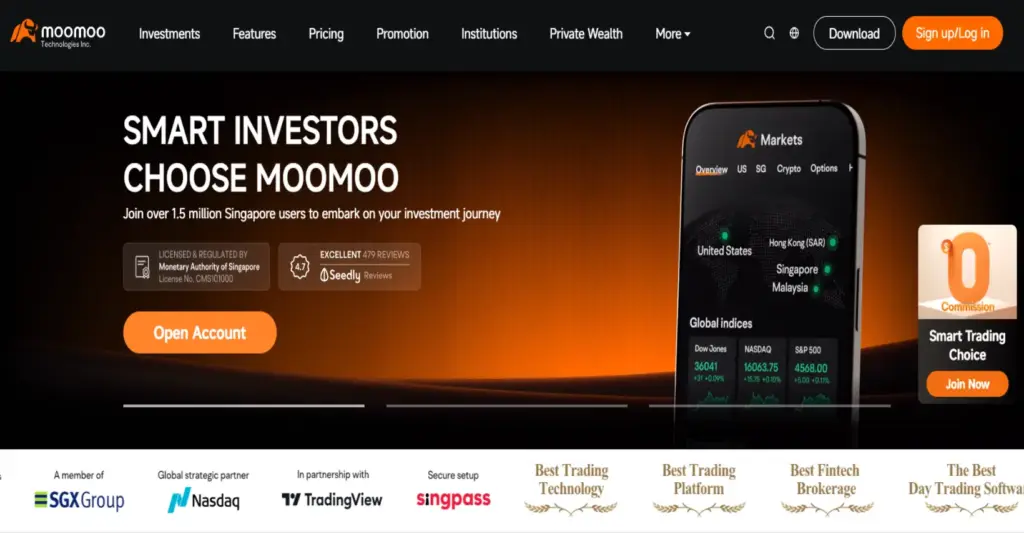
Moomoo is a newer entrant to the brokerage world that’s been aggressively attracting customers with zero-cost trading and professional-grade tools. Beyond the standard commission-free stocks and ETFs, Moomoo offers no-cost options trading and notably low margin rates – making it attractive for margin traders who don’t want to pay Interactive Brokers’ complexity tax.
Bankrate highlighted Moomoo for its good prices and professional features at consumer-friendly costs. NerdWallet noted that for investors seeking a clean, beginner-friendly UX with some advanced tools, Moomoo is worth consideration. The platform includes real-time market data, advanced charting, and options flow analysis.
As a newer and less established brand, some investors may have concerns about track record and stability compared to Fidelity or Schwab. Customer support is still maturing, and educational resources aren’t as deep as legacy brokers.
| ✓ STRENGTHS | ✗ WEAKNESSES |
|---|---|
| ✓ $0 commissions including options ✓ Very low margin rates ✓ Advanced charting and options flow analysis ✓ Aggressive promotional bonuses ✓ Real-time market data at no cost | ✗ Less established brand ✗ Customer support still maturing ✗ Limited educational resources ✗ No mutual funds or bonds ✗ Regulatory concerns in some markets |
🎯 Best For: Cost-conscious traders wanting professional tools without fees, and margin traders seeking low rates
Full Comparison Table
| Platform | Commissions | Minimum | Best For | Score |
|---|---|---|---|---|
| Fidelity | $0 | $0 | Everything (best overall) | 9.6 |
| Charles Schwab | $0 | $0 | Active trading + banking | 9.5 |
| Robinhood | $0 | $0 | Beginners + crypto | 9.1 |
| Wealthfront | 0.25%/yr | $500 | Robo-advising + tax optimization | 9.0 |
| Betterment | 0.25%/yr | $0 | Hands-off + SRI portfolios | 8.8 |
| Vanguard | $0 | $0* | Low-cost index investing | 8.7 |
| E*TRADE | $0 | $0 | Education + options trading | 8.6 |
| SoFi | $0 | $0 | All-in-one finance app | 8.5 |
| Interactive Brokers | $0 (Lite) | $0 | Advanced/international trading | 8.5 |
| M1 Finance | $3/mo | $0 | Custom portfolio pies | 8.3 |
| Webull | $0 | $0 | Paper trading + charting | 8.2 |
| Public | $0 | $0 | Treasuries + social investing | 8.0 |
| Acorns | $3–$9/mo | $0 | Micro-investing spare change | 7.8 |
| J.P. Morgan | $0 | $0 | Chase banking integration | 7.7 |
| Moomoo | $0 | $0 | Low-cost margin + options | 7.5 |
How to Choose the Right Investment App for You
Choose Based on Your Experience Level
Complete Beginner: Robinhood (sleekest app), Acorns (zero effort micro-investing), or Betterment (fully automated). These platforms minimize decision-making and make it easy to start with as little as $1.
Growing Investor: Fidelity (scales from beginner to advanced), SoFi (all-in-one finance), or M1 Finance (custom portfolio building). These grow with you as your knowledge increases.
Active Trader: Charles Schwab (thinkorswim platform), Interactive Brokers (lowest costs, global access), or Webull (advanced charting). These offer professional-grade tools for serious trading.
Choose Based on Your Investing Style
Hands-off / automated: Wealthfront (best robo-advisor, daily tax-loss harvesting), Betterment (goal-based, advisor access), or Acorns (spare change investing). Let algorithms do the work.
Self-directed / DIY: Fidelity (best overall), Schwab (broadest selection), or Robinhood (easiest to use). You pick the investments; the platform executes.
Hybrid approach: M1 Finance (custom pies + auto-rebalancing), Wealthfront (managed + DIY stock account), or SoFi (automated + active investing).
Choose Based on What You’re Investing In
Index funds and ETFs: Vanguard (invented index investing, lowest costs) or Fidelity (zero-expense-ratio funds).
Individual stocks: Robinhood (simplest), Fidelity (best research), or Schwab (broadest selection).
Options: E*TRADE (volume discounts), tastytrade (options-focused), or Interactive Brokers (lowest costs).
Cryptocurrency: Robinhood (widest crypto selection among brokers) or Coinbase (crypto specialist).
Bonds and Treasuries: Schwab (150,000+ bonds, $0 on Treasuries) or Public (direct Treasury bill investing).
Frequently Asked Questions
Q: What is the best investment app for beginners in 2026?
Fidelity is the best overall investment app, scoring perfectly across nearly every category according to NerdWallet, Bankrate, and StockBrokers.com. For the easiest mobile experience, Robinhood’s intuitive app is hard to beat. For completely hands-off investing, Wealthfront and Betterment automate everything. And for micro-investing with spare change, Acorns makes it effortless to start.
Q: Are investment apps safe?
Yes, major investment apps are regulated by the SEC and FINRA, and accounts are protected by SIPC insurance up to $500,000 (including $250,000 for cash). Fidelity, Schwab, Vanguard, and other established brokers have decades of track record. Newer platforms like Robinhood and Webull are also SIPC members. Always verify a platform’s regulatory status before investing.
Q: Can I invest with just $1?
Yes. Many platforms now offer fractional shares, allowing you to invest as little as $1 in stocks and ETFs. Fidelity, Robinhood, Schwab (S&P 500 stocks), Public, SoFi, and Webull all support fractional share investing. Acorns starts investing your spare change once you’ve accumulated $5 in round-ups.
Q: Should I use a robo-advisor or invest on my own?
If you want automated portfolio management without making investment decisions, robo-advisors like Wealthfront (0.25% fee, daily tax-loss harvesting) or Betterment (0.25% fee, advisor access on Premium) are excellent choices. If you want to choose your own investments, self-directed platforms like Fidelity, Schwab, or Robinhood give you full control with $0 commissions. Many investors use both – a robo-advisor for long-term retirement savings and a self-directed account for individual stock picks.
Q: What fees should I watch out for?
Commission-free trading is now standard, but watch for: account maintenance fees (M1 charges $3/mo, Acorns charges $3–$9/mo), advisory fees on robo-advisors (typically 0.25%), expense ratios on funds (lower is better – Vanguard and Fidelity lead here), margin interest rates, options contract fees (typically $0.50–$0.65/contract), and account transfer or closing fees.
Q: Is it worth paying for Robinhood Gold?
At $5/month, Robinhood Gold provides a 3% IRA match (vs. 1% without Gold), higher interest on uninvested cash, professional research from Morningstar, larger instant deposits, and margin investing access. For investors contributing the maximum $7,000 to an IRA, the 3% match provides $210 in value alone, making the $60 annual cost worthwhile. For smaller accounts, the math is less compelling.
Final Thoughts
The investment app landscape in 2026 is remarkably strong. Commission-free trading is universal, fractional shares have eliminated the barrier of high stock prices, and robo-advisors provide sophisticated portfolio management for a fraction of what human advisors charge. You genuinely cannot go wrong with any of the top-rated platforms on this list.
For most people, the best approach is to just start. Pick Fidelity or Schwab if you want a reliable platform that does everything well. Choose Robinhood if you want the simplest possible mobile experience. Go with Wealth front or Betterment if you’d rather not make investment decisions yourself. And consider Acorns if you struggle to save and want to invest your spare change automatically. The most important investment decision isn’t which app you use – it’s whether you start investing at all.
Disclaimer: This article is for informational purposes only and does not constitute financial advice. Investing involves risk, including the possible loss of principal. Past performance does not guarantee future results. Please consult with a qualified financial advisor before making investment decisions. Prices and features may have changed since publication.
